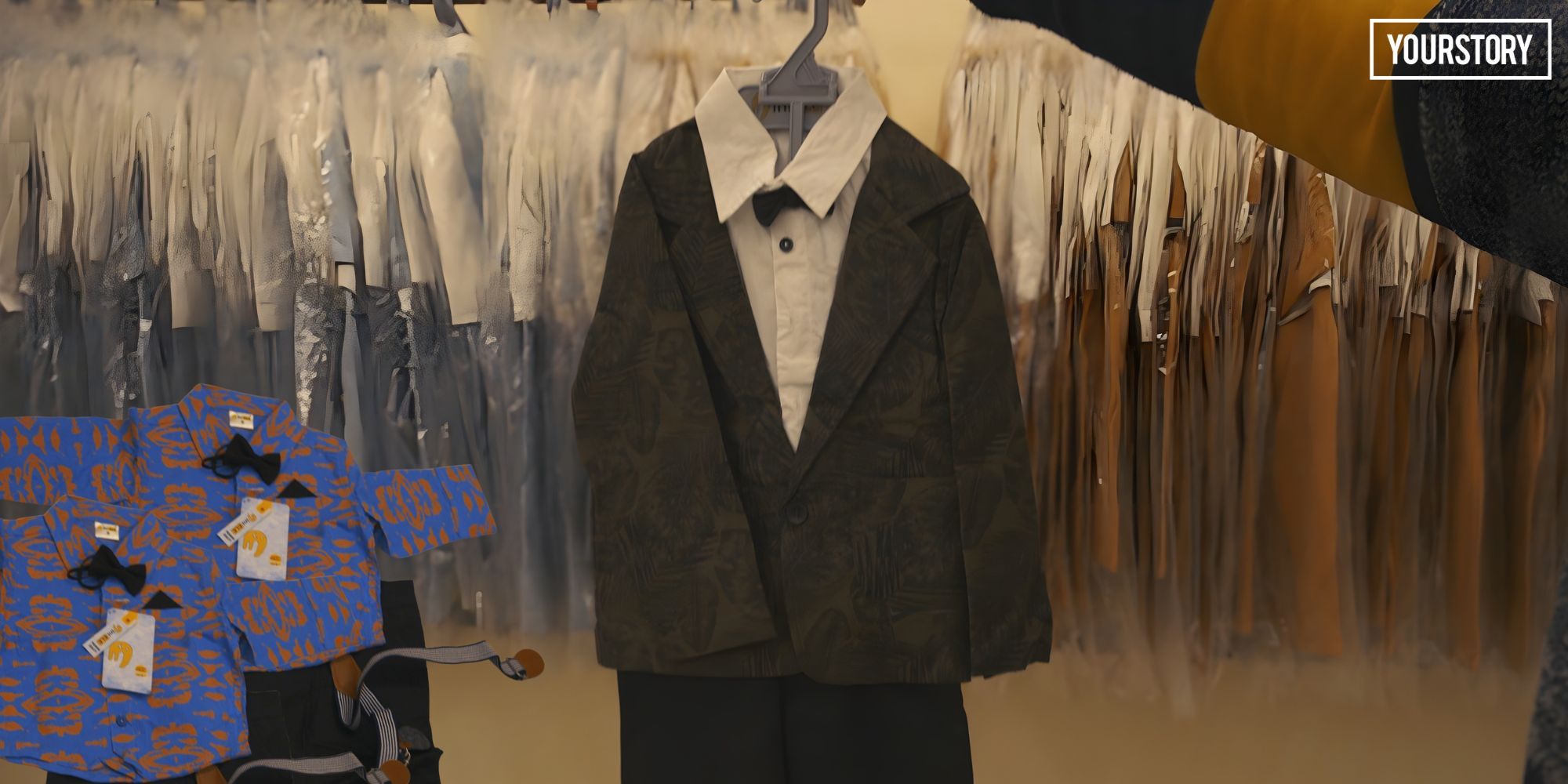
In Uttar Pradesh’s Deoria district, the trade in readymade garments—especially children’s wear—has developed around the practical needs of wholesale markets. Retailers typically look for familiar styles, reliable quality, and prices that allow them to sell quickly across multiple markets.
Repeat demand often comes when manufacturers can deliver commonly requested silhouettes at competitive rates and within tight timelines. For wholesalers supplying several regions, consistency in stitching, finishing, and dispatch matters as much as design. The opportunity often lies in producing garments that retailers frequently ask for but struggle to source with dependable quality and regular supply.
Behind this trade is a coordinated production ecosystem. Fabric sourcing, trims, pattern-making, cutting, stitching, finishing, checking, packing, and dispatch must move in a disciplined sequence. Raw materials are sourced from different markets depending on price and availability, while production floors work to ensure that each stage—from cutting to final packing—remains aligned with delivery schedules. The goal is simple: control input costs, maintain uniform finishing, and move stock quickly enough for buyers to place repeat orders.
Under the Uttar Pradesh One District One Product (ODOP) initiative, Readymade Garments has been notified as the district’s flagship product, supporting entrepreneurs and units engaged in garment manufacturing. Local units often link their growth to credit access, subsidy schemes, and training opportunities facilitated through district-level offices.
One such example is Deepak Madeshya, an entrepreneur from Deoria who runs the children’s wear brand Mini Ellie, specialising in 100% cotton garments. Before entering manufacturing, he worked as a wholesale trader, supplying garments sourced from cities such as Delhi and Bengaluru. Over time, he noticed that retailers regularly asked for certain children’s wear styles that suppliers were unable to deliver consistently.
“There was a clear gap in the market. It felt that if we produced these garments ourselves, they would find buyers across India,” he says.
His production model begins with sourcing fabrics and accessories from different parts of the country. Once a design is selected, a pattern master prepares paper patterns, after which fabric layers are spread for cutting. Cutting teams prepare size-wise pieces that are bundled and assigned across workers by a floor manager to maintain workflow efficiency.
After stitching, garments move through several finishing stages—marking, button and buttonhole work, thread trimming, pressing, and piece-level quality checks. Any piece that does not meet quality standards is separated before packing, ensuring uniformity in the final dispatch lot. According to Madeshya, this discipline on the production floor is what transforms a design into a repeatable wholesale product.
The unit began operations in 2021 with around 8–10 workers and has since expanded to employ nearly 30–35 people. Products are supplied to domestic markets such as Delhi, Kashmir, and Odisha, and the unit also reports export-linked sales to Nepal and Dubai through wholesale networks.
In Deoria’s readymade garment trade, the pace of business depends on how efficiently sourcing, production coordination, and finishing checks align with wholesale timelines. When these elements work in sync, demand tends to return in steady cycles—driven not by publicity alone but by the regular replenishment needs of garment retailers.