In late 2022, within weeks of getting access to GPT‑4, Notion had already shipped a writing assistant, rolled out workspace-wide Q&A features, and integrated OpenAI models deeply across its search, content, and planning tools.
But as models advanced—and users began asking agents to complete entire workflows—Notion’s team saw limits in their system architecture. The old pattern of prompting models to do isolated tasks was limiting the ceiling of what was capable on their platform. Agents needed to make decisions, orchestrate tools, and reason through ambiguity, and that shift required more than prompt engineering.
> “We didn’t want to retrofit the system. We needed an architecture that actually supports how reasoning models work.”
Sarah Sachs, Head of AI Modeling at Notion
## Rebuilding for reasoning models, not retrofitting around them
Instead of patching their existing stack, Notion rebuilt it. They replaced task-specific prompt chains with a central reasoning model that coordinates modular sub-agents. These agents can search across Notion, Slack, or the web; add to or edit databases; and synthesize responses using whatever tools the task requires.
With their launch of Notion 3.0(opens in a new window), AI isn’t just embedded in workflows; it can now run them. Users assign a broad task—for example, compiling stakeholder feedback—and their agent plans, executes, and reports back. The shift toward agents that choose how to work meant designing for model autonomy from the start.
## Testing GPT‑5 with real product workloads
To validate the architectural shift, Notion evaluated GPT‑5 against other state-of-the-art models using actual user tasks.
Evaluations were grounded in feedback Notion had already marked as high priority, including questions that surfaced in Research Mode, long-form tasks that required multi-step reasoning, and ambiguous or outdated content where model judgment mattered.
The team used a combination of LLM-as-judge scoring, structured test fixtures, and human-labeled feedback.
These evaluations helped Notion identify where GPT‑5 added value—for example, in reasoning, ambiguity, research—and where environment-specific tuning would improve results.
“We didn’t cherry-pick tasks. These were high-signal workflows from our product,” says Sachs. “That’s where model differences actually show up.”
## Designing for outcomes, not just speed
Some tasks need fast responses; others don’t. By experimenting with the different reasoning levels of GPT‑5, Notion was able to customize the intelligence of their agents and find the perfect balance between response quality and latency depending on the requirements of the task.
Notion designed its agents to run for seconds or minutes depending on the job. Short latency is prioritized for direct lookups. Long-running agents—up to 20 minutes—are used for background workflows like summarizing content or updating databases.
What matters most to the team is how much time the user gets back, and not how fast the model responds. That philosophy drives how orchestration and expectations are set across the UI.
## Using Notion to build Notion AI
Every Notion team uses Notion AI. That daily use generates structured feedback and direct annotation from humans when something goes wrong. If a user thumbs down a result, it enters a pipeline for trace-level debugging.
But internal use alone wasn’t enough. The team also worked with design partners—technical customers with early access to agent features—to uncover edge cases and spot blind spots.
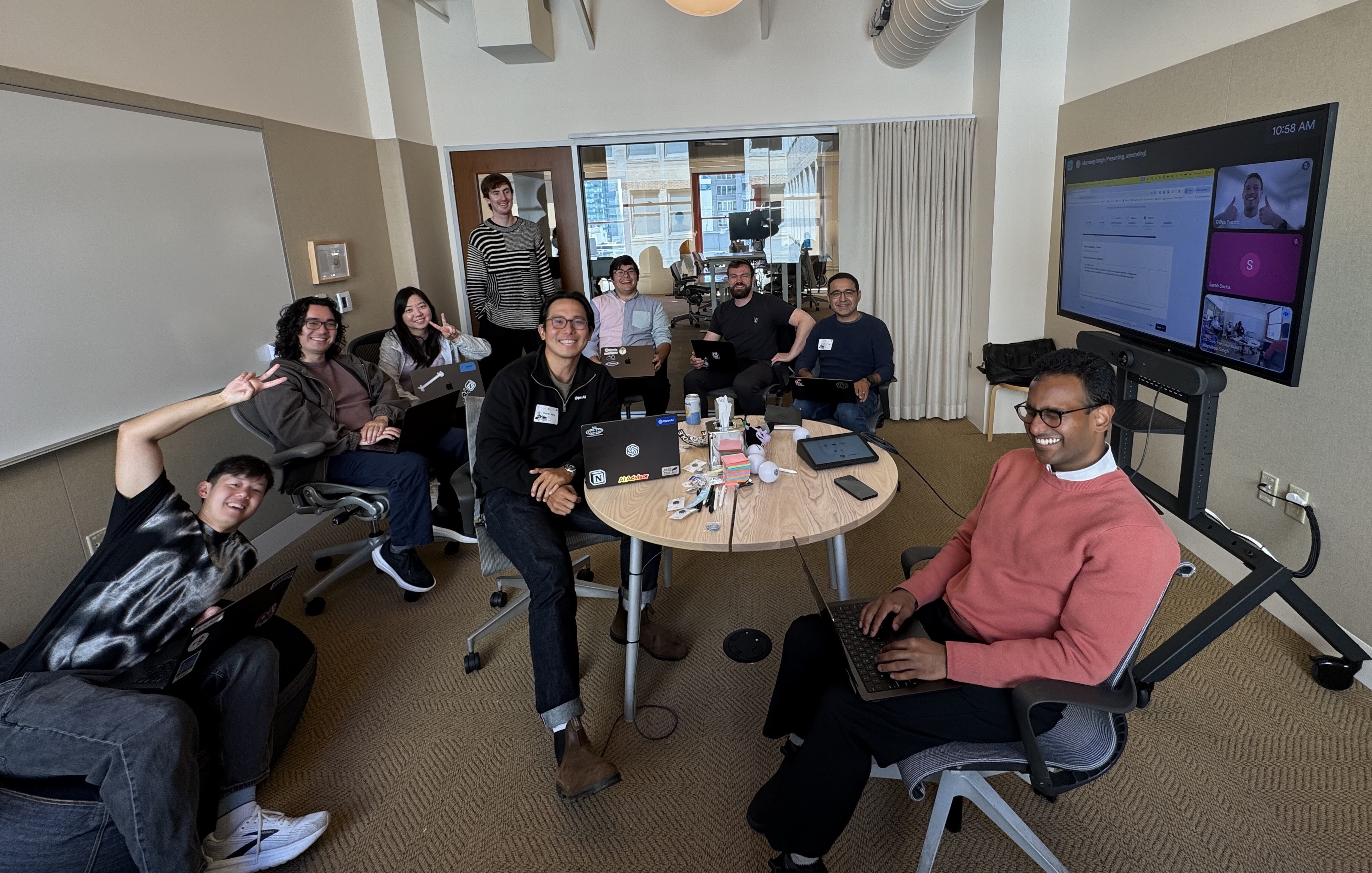
This outside-in testing helped shape product readiness, tune orchestration behaviors, and validate where GPT‑5 really moved the needle. OpenAI also uses Notion to coordinate projects and knowledge, with Notion AI embedded in daily workflows to speed up reviews and close the loop on feedback. This mutual usage creates a unique dynamic; both teams build with each other’s products, providing constant feedback and visibility into how the work performs in practice.
## Lessons for teams building with GPT‑5
Notion’s rebuild wasn’t just about launching Notion 3.0. It was about designing a system that could support new model capabilities and adapt as those models get smarter. Their approach offers a clear roadmap for other teams deploying agentic AI in production:
“We’re already seeing returns from the rebuild,” says Sachs. “If the next model unlocks something new, we’ll do what it takes to support it.”
## Ready to get started?
Contact salesStart building(opens in a new window)
Rakuten fixes issues twice as fast with Codex API Mar 11, 2026
Wayfair boosts catalog accuracy and support speed with OpenAI ChatGPT Mar 11, 2026
How Descript enables multilingual video dubbing at scale API Mar 6, 2026
Our Research * Research Index * Research Overview * Research Residency * OpenAI for Science * Economic Research
Latest Advancements * GPT-5.3 Instant * GPT-5.3-Codex * GPT-5 * Codex
Safety * Safety Approach * Security & Privacy * Trust & Transparency
ChatGPT * Explore ChatGPT(opens in a new window) * Business * Enterprise * Education * Pricing(opens in a new window) * Download(opens in a new window)
Sora * Sora Overview * Features * Pricing * Sora log in(opens in a new window)
API Platform * Platform Overview * Pricing * API log in(opens in a new window) * Documentation(opens in a new window) * Developer Forum(opens in a new window)
For Business * Business Overview * Solutions * Contact Sales
Company * About Us * Our Charter * Foundation * Careers * Brand
Support * Help Center(opens in a new window)
More * News * Stories * Livestreams * Podcast * RSS
Terms & Policies * Terms of Use * Privacy Policy * Other Policies
(opens in a new window)(opens in a new window)(opens in a new window)(opens in a new window)(opens in a new window)(opens in a new window)(opens in a new window)
OpenAI © 2015–2026 Manage Cookies
English United States