Synopsis
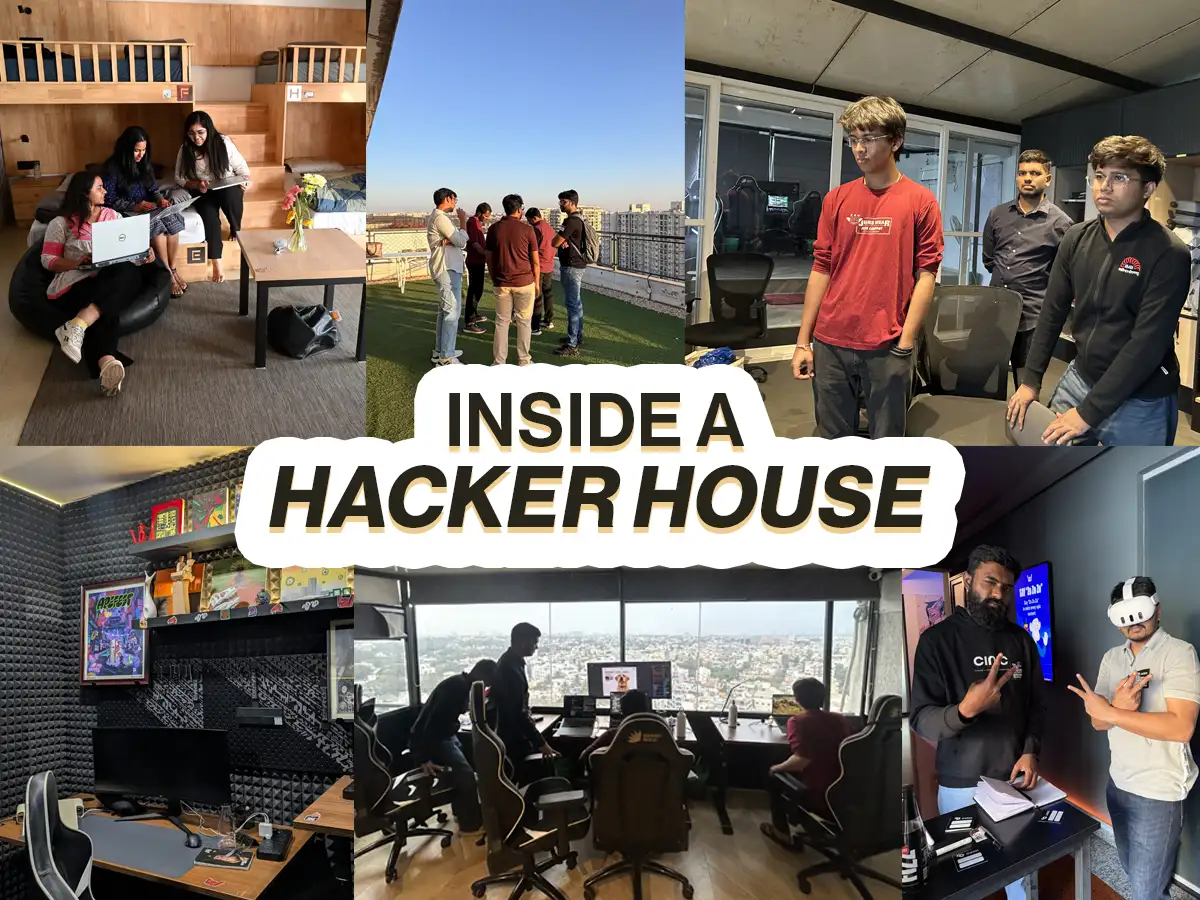
In Bengaluru, hacker houses like The Residency are turning into live-in labs where young developers build AI startups while living together. Backed by active VC interest, these spaces and evolving hackathons are shaping a new generation of full-stack builders focused on real-world products, experimentation, and launching ideas into businesses.Downtempo music plays softly in the background as residents move between workstations and common areas. At one point, a one of them orders a milkshake from the kitchen through an internal app using digital coins which get credited monthly. The penthouse — The Residency —has everything, from a small gym to a recreational area, and a terrace where residents often gather in the evenings to catch a sunset and talk through ideas and trends in AI.
On a Tuesday afternoon when ET visited this space, about 15 developers barely out of their teens sat on bean bags running through how to present their products at the upcoming demo day on March 27. These pitches are for venture funds and angel investors that have made hacker houses the new hunting ground for their pre-seed rounds. Some that have already visited are Antler India, Lightspeed, and Together Fund.
Twenty-five-year-old Yuvraj Aaditya, India lead at The Residency, said, “Builders here are deeply connected to what’s happening in San Francisco and the global AI ecosystem. Hacker houses are becoming the new hotspot for early-stage talent. VCs are actively scouting these spaces.”
The setup at The Residency, Localhost, and HackerSpace in Bengaluru and Mumbai mirror Silicon Valley’s hacker houses, where young developers live together, share resources, and experiment with new ideas. These apartments are where India’s next generation of AI builders live, collaborate, and launch early-stage products.
Evenings at The Residency, Bengaluru, developers from the 7th cohort unwind and share ideas on the penthouse terrace
Take 22-year-old Saiprasad Pandilwar, for instance. He is in his final year at the Vellore Institute of Technology and lives at a hacker house building his startup MyPerro. His 10-member team is working on building AI-powered smart collars that can monitor a dog's health in real time, helping detect early symptoms.
The problems developers are trying to solve at these places are varied, and they are ready to make an impassioned pitch if you can spare a few minutes. One team is building tools to help UPSC aspirants study more efficiently using AI-generated videos. Another is working on products that simplify investing for first-time users. Some are experimenting with micro-video platforms, while others are building agentic AI assistants that can recommend eateries and automate routine tasks.
A resident at The Residency pays Rs 40,000 for a shared room and Rs 80,000 for a single room per month.
Weekly demo days where residents present what they’ve built, rule one- show don't tell.
But hacker houses are just one piece of the pie. Old-school hackathons are also very much there, albeit going through a shift.
The shift
The concept of 'predefined problem statements' is dying.
“To be very prescriptive (on problem statements) is probably not a great idea because you are basically limiting the scope of what people can do. I think we should let them be free and come with their own conviction,” said Vivek Raghavan, cofounder of Bengaluru-based Sarvam AI. The startup said it scouts for talent at hackathons.
“We’re seeing many companies run hackathons around their own platforms, both externally and internally, to surface new use cases rather than just build demos,” said Dev Khare, partner at Lightspeed, adding that this is prevalent in San Francisco and is now witnessing increased activity in India. He acknowledged that hacker houses are mushrooming.
Sajith Pai, partner at Blume Ventures, in a fireside chat with residents of the hacker house
A quick search shows there are at least five to 10 AI build-a-thons a week in top cities.
“The hackathons I’ve been participating in and organising recently give builders everything they could possibly need in 24, 36, or 48 hours. Compute credits, APIs, cloud access, even mentorship," said 18-year-old developer Surya Maddula. He added that the deliverable has to have the potential to get real users or generate revenue.
"Before Covid, backend and frontend roles were separate. Now, if you want to be hired as a developer, you’re expected to be full-stack. You need to know frontend, backend, APIs, databases, AI integration," said Priyanshu Ghosh, a former resident at Lossfunk who’s building his startup and was previously with Perplexity. He added that developers today need to talk to clients directly.
Take OpenClaw (Moltbook), for instance, which went viral this January for its agent-to-agent conversations. “Within just two days of gaining traction, US developers organised independent hackathons around Moltbook — not to fix gaps with a problem statement in hand, but to explore what could be built on top of it,” says Natasha Malpani, founder of Boundless Ventures, a VC firm.
A 3D printer sits above the workstation, allowing residents to prototype and build hardware alongside their software projects
Developers and hackers also spoke about another emerging trend: hardware-led hackathons. For software, you just need a laptop and wi-fi. But now there are hackathons where organising companies give money to buy components and build physical products. “Hardware feels more exciting to many new founders,” said a developer.
OpenClaw, earlier known as Moltbook and now acquired by OpenAI, hosted an event in India in collaboration with Peak XV and GrowthX, and invited developers to present what they’ve built and shipped using the platform.
Venture fund Accel also hosted a ‘Dev Day Community Showcase’ in partnership with Anthropic in Bengaluru, which provided a platform for startups to demo products they’ve built using Claude and interact with tech leaders.
Big tech companies like Google, IBM, and Nvidia, as well as AI firms such as OpenAI, Perplexity, etc., also host such events to build solutions on top of existing technologies.