Synopsis
Industrial47 and a group of angel investors participated in the funding round of the Bengaluru-based deeptech startup, which is building fusion energy systems — technology that aims to generate power the same way the sun does — by fusing hydrogen atoms to produce clean, near-limitless energy. The fresh funds will be used to build and test the scompany's tokamak (fusion machine).The company is building fusion energy systems — technology that aims to generate power the same way the sun does — by fusing hydrogen atoms to produce clean, near-limitless energy.
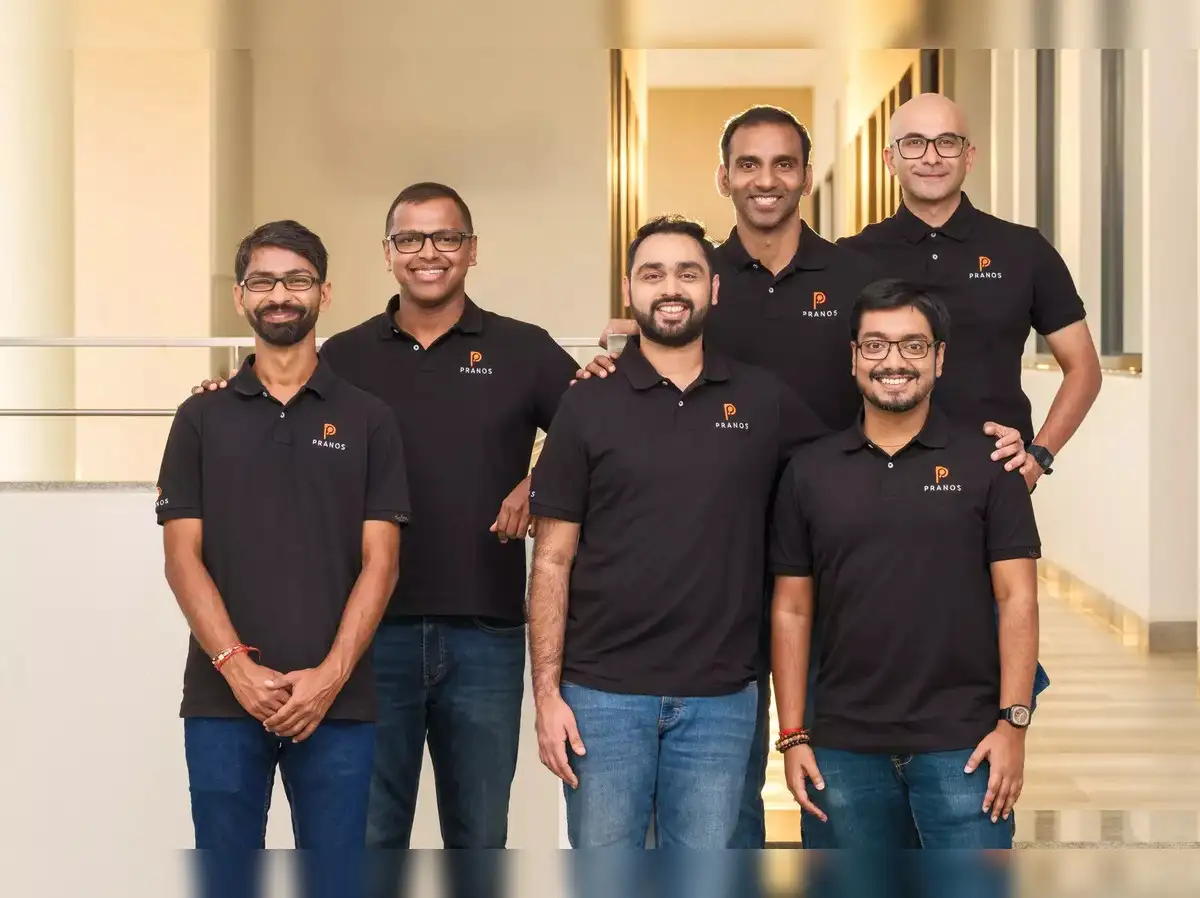
Pranos was founded in 2024 by Shaurya Kaushal and Roshan George, who led a multidisciplinary team of physicists and engineers. The startup is co-incubated at the Jawaharlal Nehru Centre for Advanced Scientific Research (JNCASR - DST) and the Institute for Plasma Research (IPR).
Pranos is working on three core areas: software to design and control reactors, a compact tokamak (fusion machine), and high-temperature superconducting magnets.
Kaushal said the company is taking an engineering-first approach. “Fusion has been proven scientifically. The real challenge now is making it commercially viable,” Kaushal told ET.
The fresh funds will be used to build and test its tokamak, with the company targeting its first key milestone called “first plasma” in 2026.
“First plasma is when the machine successfully creates and controls plasma. It’s an important step before you even get to producing energy,” Kaushal explained.
While fusion power plants are still at least a decade away, the startup is already looking at nearer-term revenue opportunities.
“Selling electricity from fusion will take time. But technologies like reactor software and superconducting magnets can be commercialised earlier,” he said.
These magnets, he added, are already used in industries like MRI machines, defence, and transport. “We are building fusion-grade magnets, which are more advanced and can be applied in multiple sectors,” he said.
Kaushal also pointed to cost advantages. “Building this in India is seven to 10 times cheaper than in the US at our stage,” he said.
Over the next two years, the company plans to focus on hitting technical milestones and preparing its technology for early commercial use. “Our goal is to first commercialise the technology and then move toward building full-scale fusion power systems,” he said.
Globally, fusion is gaining momentum, with billions of dollars being invested and pilot plants being built in the US, Europe, and China. Kaushal estimated that about $9-10 billion has already been invested in the sector globally.
He said India has a strong base through IPR and its participation in the International Thermonuclear Experimental Reactor (ITER) programme. “There is already an ecosystem of suppliers in India building fusion-grade components. We are building on top of that,” he said.
Pranos is also working with IPR to integrate its software into existing tokamaks in the country. The startup is currently building its own machine as a testbed. “Our tokamak will help us connect software and hardware and fine-tune the system in real conditions,” he said.
On the broader ecosystem, Kaushal said India is still in the early stages.
Investors say they are betting on the long-term potential. “Fusion isn’t just promising; it is inevitable,” said Manish Singal, founding partner at pi Ventures.
Ritu Verma, managing partner at Ankur Capital, added, “Pranos is building the full stack — reactor design, magnets, and control systems — and that stood out to us.”