Synopsis
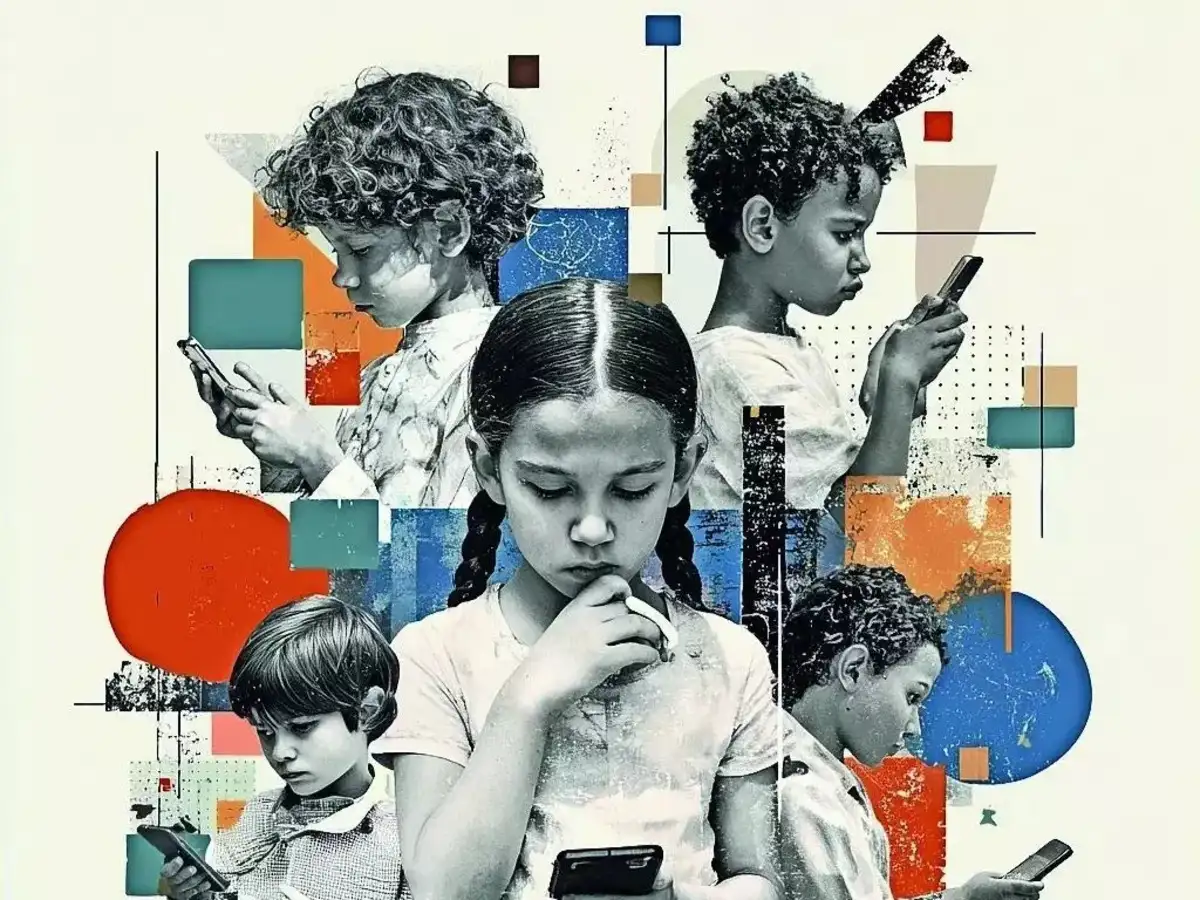
The Centre is building its stance on banning or restricting social media usage for children, with consultations held to assess technical capabilities of platforms. With no age-based controls currently, there is growing concern over harm, misinformation and addiction. States are exploring curbs, and global moves are shaping India’s evolving approach.Listen to this article in summarized format
Earlier this month, Karnataka and Andhra Pradesh announced such curbs and more states are likely to join the debate. Australia banned social media access for those under 16 last year. This covers Facebook, Instagram, Snapchat, Threads, TikTok and X, among others. France, Spain and Indonesia, along with several US states, are also contemplating such curbs.
“Globally, there is a consensus building on the harms to children because of social media,” a senior official said.
'Deep concern'
“We are trying to build a consensus across party lines on such a move,” the official said.
There has been momentum building on the issue in the country. Last week, the National Human Rights Commission (NHRC) called for a meeting on the issue, following which TDP MP Lavu Srikrishna Devarayulu initiated a meeting of 15 MPs to discuss the matter.
“A social media ban for children of a certain age is imperative. Several social media companies are trying to spread the narrative that such a ban will lead to a digital divide. But we feel that this will create an opportunity for companies to create more educational tools using technological innovations,” Devarayulu, who has been trying to garner support for this issue among other parliamentarians, told ET.
On Thursday, NHRC said it has found “serious, large-scale, and systemic violations” by digital, social media, ed-tech, and AI platforms widely accessed by children in India. The commission has asked several ministries including MeitY to inquire into the matter and submit a detailed, point-wise action taken report (ATR) within 15 days.
There is “deep concern” about the impact of social media on children with regard to the consumption of inappropriate content, misinformation, bullying and cyber fraud as well as addiction-related issues, a second official said.
The person said the government is examining the Australia decision as well as studying findings regarding such moves elsewhere.
Options include an outright ban on social media usage by children or having a tiered approach that allows access to age-appropriate offerings from platforms such as YouTube or Meta's Facebook and Instagram. The government will also have to decide on the age threshold — below 13 or 16 — for imposing curbs.
Such controls could dent the market for social media platforms as India is among the largest user base for several of them, with young adults and children forming a substantial chunk. These companies will likely react sharply to any curbs, experts said.
A ban could unleash worse harms, said an executive at one of the social media companies.
“If the government bans social media, it is opening access to hundreds of illicit and illegal channels that operate on the Internet,” the person said, adding that imposing strong safeguards will be better than an outright ban.
Experts see a parallel with online gaming. Several states came up with their own legislation on the matter until the Centre stepped in and banned any kind of online gaming in one fell swoop last year.
Key institutions have also been seized of the matter.
“The NHRC held a meeting last week, the parliamentary committee has raised it with us, the Economic Survey has pointed it out, so there is a deep concern and an increasing opinion that something needs to be done about it,” said another official.
At its latest meeting with MeitY officials, the parliamentary committee quizzed the government on steps being taken to ensure children’s safety online. It had earlier pushed for clearer operational mechanisms for age verification to ensure platforms don't bypass these protections.
Earlier this month, electronics and information technology minister Ashwani Vaishnaw told Parliament that there was unanimity within the committee on the need for new steps to bolster citizens' safety online.
The Economic Survey had in January warned that excessive use of digital devices was becoming a serious problem of addiction for both children and adults. It called for age-based access to online platforms in India and flagged the need to develop a comprehensive set of indicators to assess the multidimensional effects of digital addiction interventions.
“Platforms should be made responsible for enforcing age verification and age-appropriate defaults, particularly for social media, gambling apps, auto-play features, and targeted advertising,” the survey said. Apart from Australia, it pointed to nations such as China and South Korea that have introduced limits on social media or gaming for minors.
The government is keeping an eye on the evolving regulatory regime on the issue. In the wake of Australia’s ban, similar legislation is at various levels of implementation in France, Spain and Portugal.
Karnataka has floated a ban on mobile phone and social media usage for children below 16, with the state government saying that a bill to that effect will be introduced in the legislative assembly in the next session. Andhra Pradesh has set a 90-day deadline ending in June to roll out a complete restriction on those below 13 using social media. On Wednesday, the Maharashtra state assembly is scheduled to hear a discussion on social media usage among teens.
(Nidhi Sharma contributed to this article)