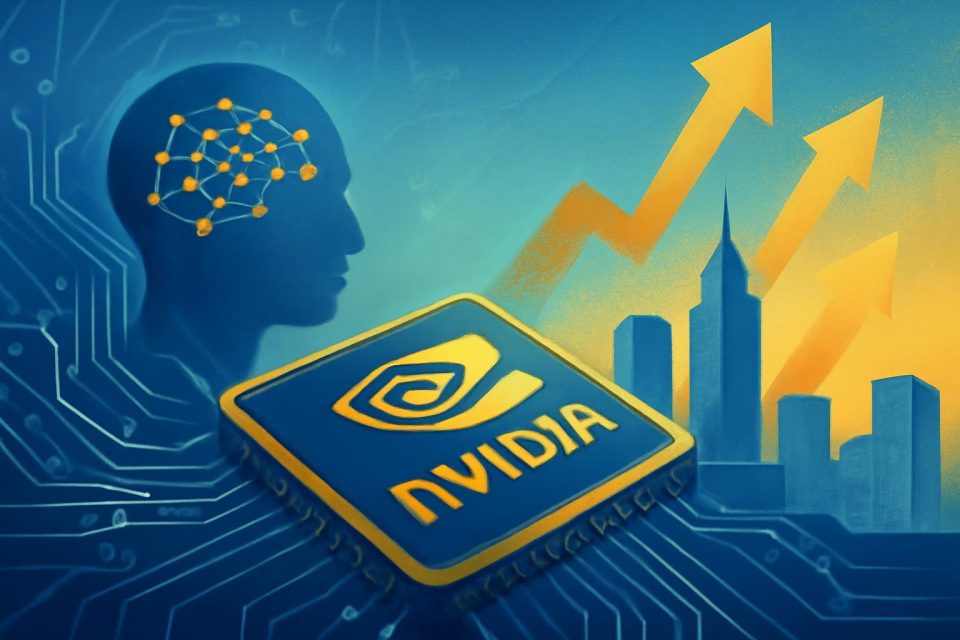
NVIDIA recently announced NeMoClaw at the GTC 2026 event, enhancing its OpenClaw framework. This new addition provides a security and privacy layer, making AI agents more suitable for enterprise applications.
While it remains to be seen if NeMoClaw will meet its ambitious goals, this development signifies NVIDIA's commitment to advancing the Agentic AI stack. The company also introduced Nemotron, a suite of open models designed for creating specialized AI systems.
NVIDIA joins tech giants like Google, Amazon, and Microsoft in the race to develop frameworks that facilitate the creation and management of AI agents, akin to the early competition in cloud computing.
Currently, enterprises can build AI agents using programming languages like Python and JavaScript, but this process can be time-consuming, especially for large-scale applications. Agentic frameworks simplify this by providing built-in features, acting as the operating systems for autonomous software.
Popular open-source frameworks include LangChain, LlamaIndex, and LangGraph. Major tech companies offer various tools integrated with their ecosystems, such as AutoGen and Vertex AI Agent Builder, which serve as essential resources for businesses undergoing agentic transformation.
Ashvin Vellody from Deloitte India notes that the demand from enterprises, combined with technological advancements, is driving Big Tech to innovate in AI frameworks. Companies are realizing that value lies in simplifying technology for a broader range of developers.
In India, the trend is already evident. For instance, Razorpay launched its Agentic AI Studio in partnership with Anthropic’s Claude model, allowing businesses like Swiggy and Zomato to utilize AI agents for order placement and payment processing.
Razorpay focuses on orchestration and application layers rather than foundational models, enabling businesses to create tailored AI agents and define workflows in simple language.
Other Indian startups, such as Gnani.ai and Bolna AI, are also emphasizing orchestration, allowing rapid deployment of voice agents and multilingual capabilities. This focus on the orchestration layer is attributed to lower entry barriers and quicker monetization opportunities.
Experts believe that while foundational models are crucial, the long-term value will emerge from higher layers of the stack, where organizations can effectively leverage these technologies to achieve business goals.
As companies strive to dominate the AI framework landscape, the focus is shifting towards monetization strategies, similar to how cloud platforms evolved. This includes subscription fees, usage-based pricing, and revenue-sharing models.
In conclusion, as enterprises transition from experimentation to deployment, the real advantage will go to those who control the orchestration and monetization of AI agents. The current fragmented market is expected to consolidate into a few dominant platforms that will shape the future of enterprise solutions.