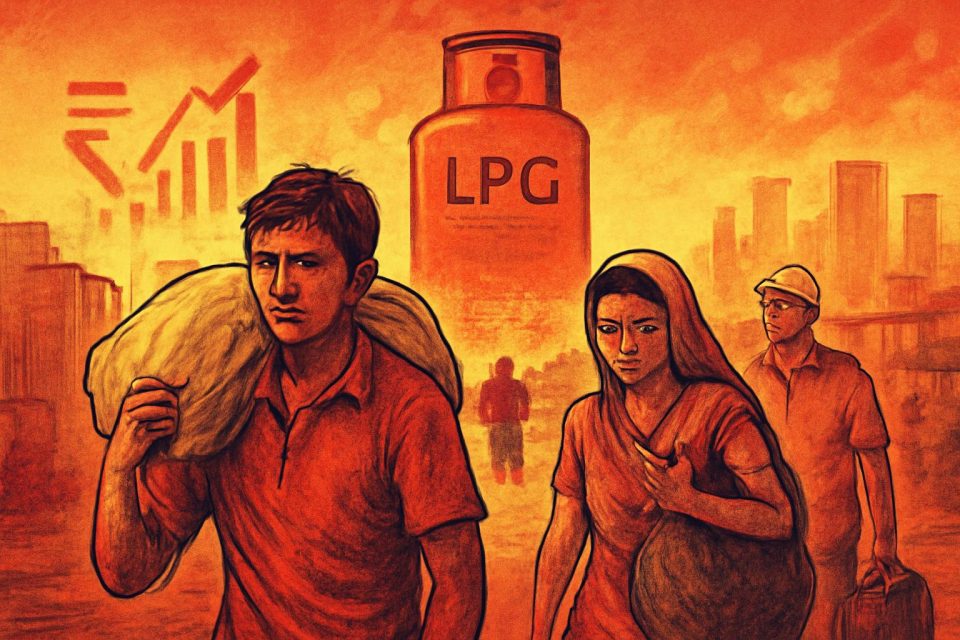
As tensions rise in West Asia, the ongoing LPG supply crisis is prompting a significant migration of gig and manufacturing workers back to their hometowns in India. The situation echoes the mass exodus seen six years ago, highlighting the ongoing struggle for survival.
Currently, vessel movement through the Strait of Hormuz has nearly halted, affecting around 25% of the world's seaborne oil trade and nearly 90% of India's LPG imports. Despite Iran designating India as a "friendly nation," allowing safe passage for Indian-flagged vessels, the supply of LPG remains critically low.
This shortage has led to rampant bootlegging and inflated prices, with a 5 Kg LPG cylinder now costing ₹400, up from ₹100. This price surge is particularly burdensome for gig and blue-collar workers who rely on urban ecosystems for their livelihoods.
Impact on Workers: Many workers are feeling the pressure to return home. A Delhi-based househelp worker shared her concerns, stating that the rising costs of LPG and diesel are making it difficult to sustain their urban lives. Reports indicate that around 200-300 workers from a single colony in East Delhi are already migrating back.
Similar trends are observed in major cities like Mumbai and Bengaluru, where gig workers, including delivery partners and part-time professionals, are also returning to their villages due to the LPG crisis.
Nia.one, a startup connecting gig workers with employers, reports growing unease among its members. Many are waiting for their salaries to decide whether to return home, as the financial strain becomes unbearable.
The crisis is not limited to LPG; food prices in the informal sector have also increased significantly. For instance, breakfast items in Tamil Nadu have risen from ₹30 to ₹45, attributed to the LPG shortage.
Delivery workers, like Rahul Kumar from Zomato, have noted that several colleagues are leaving for their villages, with many more ready to follow suit if conditions do not improve. The closure of smaller restaurants due to the crisis has further reduced their earning potential.
App-based drivers face similar challenges, as rising fuel prices compound their difficulties. The Telangana Gig and Platform Workers’ Union has reached out to government officials, highlighting the struggles faced by drivers reliant on CNG.
Future Outlook: Experts suggest that while some gig workers may shift to e-commerce for temporary work, the lack of a robust support system makes it challenging for many to transition between jobs. Reports indicate that over 300,000 migrant workers in textile hubs have not returned after recent holidays, exacerbating the labor shortage.
As the conflict in West Asia continues without resolution, the hope remains that the Indian government can stabilize LPG supplies. If not, the country may witness a repeat of the mass migrations seen during the COVID-19 lockdowns.