Synopsis
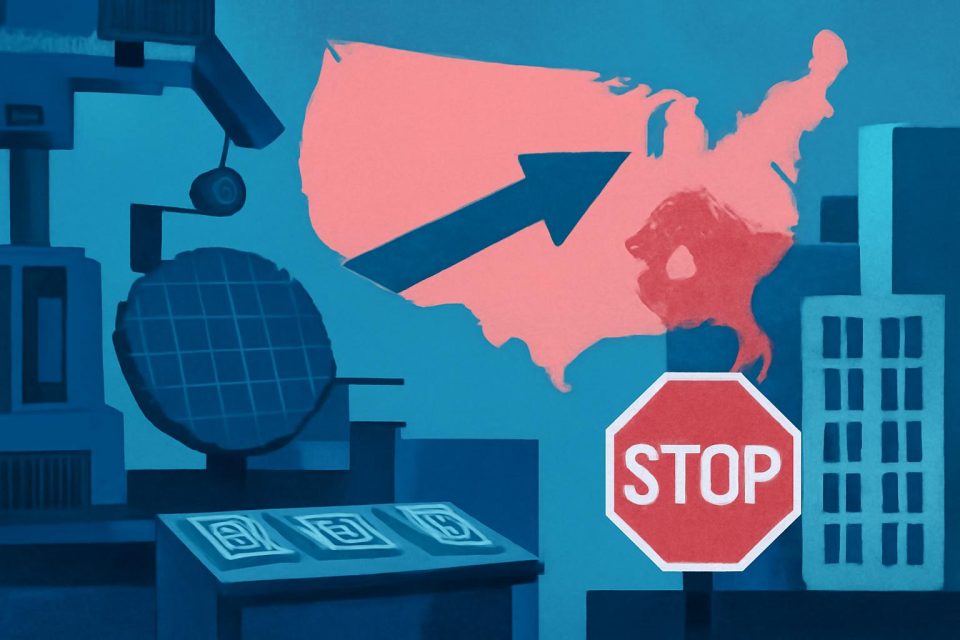
The draft MATCH Act announced late on Thursday is aimed at protecting the US lead in artificial intelligence by preventing Chinese companies from obtaining chip manufacturing tools they cannot make themselves and ensuring that companies based in US-allied nations face the same restrictions as their US rivals.The draft MATCH Act announced late on Thursday is aimed at protecting the US lead in artificial intelligence by preventing Chinese companies from obtaining chip manufacturing tools they cannot make themselves and ensuring that companies based in US-allied nations face the same restrictions as their US rivals.
The US has previously introduced several rounds of export restrictions aimed at curbing China's chipmaking capability, but those were led by President Donald Trump or President Joe Biden rather than Congress.
Lawmakers said their focus was on restricting technologies where China relies on imports, such as immersion DUV lithography needed to create chip circuitry. This market segment is dominated by the Netherlands' ASML, competing with smaller Japanese rival Nikon.
The proposed law would also prevent the sale or servicing of such equipment to leading Chinese chipmakers SMIC, Hua Hong, Huawei, CXMT and YMTC.
ASML declined to comment on Friday.
Existing rules coordinated with the U.S. and enforced by the Dutch government block ASML from sending its most advanced tools to China. However, ASML still sells older DUV lines to Chinese chipmakers and to leading South Korean and Taiwanese companies with operations in China. The new law would prohibit that.
China was ASML's largest market in 2025, accounting for 33% of sales. That figure is expected to drop to 20% this year, it said in January.
"It is not our place to comment on draft legislation proposed by lawmakers from other countries," said a spokesperson from the Netherlands' foreign ministry, which oversees trade and export policy.