Synopsis
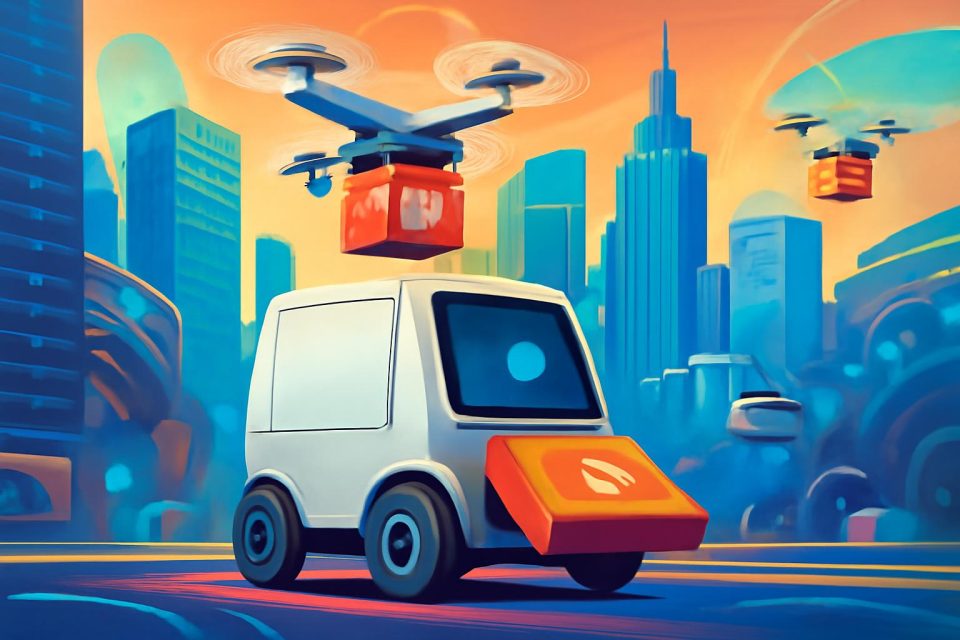
Autonomous food delivery robots and drones could cut costs by several dollars to as low as $1 per order, a shift that could unlock billions of dollars in profits for the global food delivery industry, Barclays said on Wednesday.Listen to this article in summarized format
Global platforms such as DoorDash are partnering with autonomous delivery operators primarily through sidewalk delivery robots (SDRs) and drones to enhance their capabilities, which Barclays said signals a "clear strategic shift."
Autonomous delivery costs currently range from about $5 to $7 per order drop in early adoption markets with high labour costs, the British brokerage said, which is $3 to $4 cheaper than traditional rider delivery.
In the long term, autonomous delivery costs could decrease to $1 per drop, implying potential savings of $8 to $9, compared with current rider deliveries in higher-labour-cost regions.
Assuming about $4 cost savings per drop at long-term penetration levels, Barclays forecasts autonomous delivery could unlock about $16 billion in an annual global profitability pool for food delivery platforms.
Autonomous delivery penetration is currently at a nascent stage, with less than 1% of the global food delivery orders, Barclays estimates.
However, the brokerage expects it to rise to about 2% by the end of the decade and jump to roughly 10% by 2035.
Barclays expects DoorDash and Chinese food delivery leader Meituan to be near-term beneficiaries, given early commercial deployments, platform-level investment and exposure to higher labour costs that could be mitigated via automation.
It also projects Uber to be well-positioned, while it bets on Dutch technology investor Prosus to be a long-term beneficiary.
Delivery Hero, its Middle East unit, Talabat, and Southeast Asia's Grab are positioned as medium- to longer-term beneficiaries, Barclays said, with automation developments being pilot-led and small.