Synopsis
Indian cities are transforming. Mobility platforms are now essential urban infrastructure, connecting people and goods seamlessly. These platforms create income for drivers and provide valuable data for city planning. They are also key to adopting electric vehicles. This integrated approach is shaping more connected, accessible, and efficient cities for the future.As cities become denser and more complex, scalable mobility platforms are increasingly becoming central to how urban systems function.
India’s context makes this especially pronounced. The country operates at the intersection of extreme density, high price sensitivity, mixed traffic conditions, and inherently multimodal behaviour that spans two-wheelers, three-wheelers, cars, and public transport. These conditions place unique pressure on mobility providers to design solutions that are simple, affordable, and resilient. At the same time, they create an environment where innovation must happen at scale to be meaningful.
Ride-hailing platforms such as Uber are increasingly being seen as core urban infrastructure, powered by scalable systems that match demand and supply in real time. Their role, however, is expanding beyond individual trips to enabling integrated mobility networks that support the movement of people and goods across cities, spanning multiple use cases and price segments.
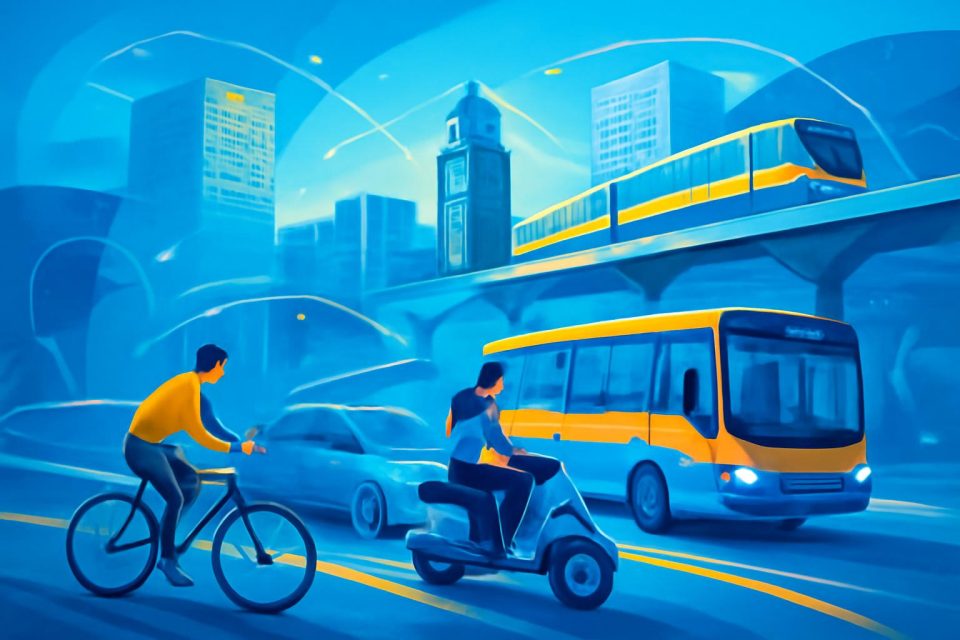
The future of mobility centers on creating a single, adaptable gateway to urban movement. This integrated platform can offer commuters a seamless choice of transport, be it a bike, an auto, a car, or public transit, based on their specific trip needs. Similarly, it empowers small businesses with reliable, on-demand parcel delivery across a city. Ultimately, this comprehensive approach lessens friction, optimises the use of existing resources, and increases the predictability of daily movement over time.
What enables this model at city scale is the design of mobility systems beneath the surface. In dense urban environments, affordability and reliability are driven by smart marketplace design, from vehicle mix to efficient demand-supply matching and real-time vehicle positioning. Two- and three-wheelers are particularly suited for high-frequency first- and last-mile trips, while advances in routing and demand prediction cut idle time and empty runs. Together, these factors streamline movement across the city and make everyday mobility more predictable.
Mobility platforms also play an important role in expanding economic participation. For millions of drivers, platforms create access to income opportunities with flexibility and relatively low barriers to entry. Building a sustainable ecosystem means designing for predictable demand, transparent incentives, and lower friction to operate. Over time, this builds trust and encourages long-term participation. The result is not just a larger marketplace, but a more resilient one where people can plan their livelihoods and stay engaged over the long term.
Another important dimension is the role of mobility platforms in supporting better urban planning. Ridehailing and logistics platforms generate large volumes of real-time signals about how cities move. When aggregated and anonymised, this data can offer valuable insights into demand patterns, congestion trends, and gaps in connectivity.
Used responsibly and in line with privacy and regulatory expectations, such insights can inform broader conversations around public transport optimisation and infrastructure planning. Future-ready cities will be built through collaboration between governments and the private sector, where platforms contribute operating experience and data-driven perspectives, and policymakers provide long-term planning frameworks.
Sustainability is also becoming a central consideration in urban mobility. High-utilisation shared fleets improve the economics of electric vehicles by enabling faster recovery of upfront costs and lower lifetime operating expenses. While the transition will require coordinated efforts across manufacturers, financiers, charging providers, and governments, mobility platforms can play a catalytic role by providing predictable demand and earning visibility for drivers who choose to adopt EVs.
The larger story here is not about any single product or category. It is about how scalable mobility platforms are becoming part of the connective tissue of urban life. By integrating multiple modes, supporting the movement of people and goods, and designing marketplaces that balance affordability with sustainability, platforms like Uber are helping shape a more inclusive model of urban mobility.
For India, this represents both an opportunity and a responsibility. Building cities that are more connected, accessible, and efficient will depend in no small part on how effectively these platforms are woven into the broader urban ecosystem.
In that sense, scalable mobility is no longer just a convenience. It is a foundational element of how India’s cities will grow.
This article has been contributed by Prabhjeet Singh, President, Uber India and South Asia.
Disclaimer: The above content is non-editorial, and TIL hereby disclaims any and all warranties, expressed or implied, relating to it, and does not guarantee, vouch for or necessarily endorse any of the content.