WPP has revolutionized the training process for humanoid robots, reducing the time required from days to mere minutes. This significant improvement is achieved through the use of G4 VM instances powered by NVIDIA RTX PRO 6000 Blackwell on Google Cloud, tailored for the unique demands of training physical AI.
As robots become integral to the film industry, enabling controlled camera movements in challenging environments, the complexity of programming these machines has grown. WPP's innovative approach not only streamlines the training process but also opens new avenues for creative expression.
Redefining Agency Models
As one of the largest marketing organizations globally, managing $70 billion in media for enterprise clients, WPP has redefined its agency model to integrate AI into production workflows. The introduction of WPP Open, a proprietary AI operating platform, allows for the incorporation of advanced multimodal intelligence into creative processes.
The results have been impressive; for Verizon, WPP developed an AI-enhanced promotional pipeline that produced 15 videos in 70% less time, showcasing significant efficiency gains across production cycles.
Innovative Training Methodology
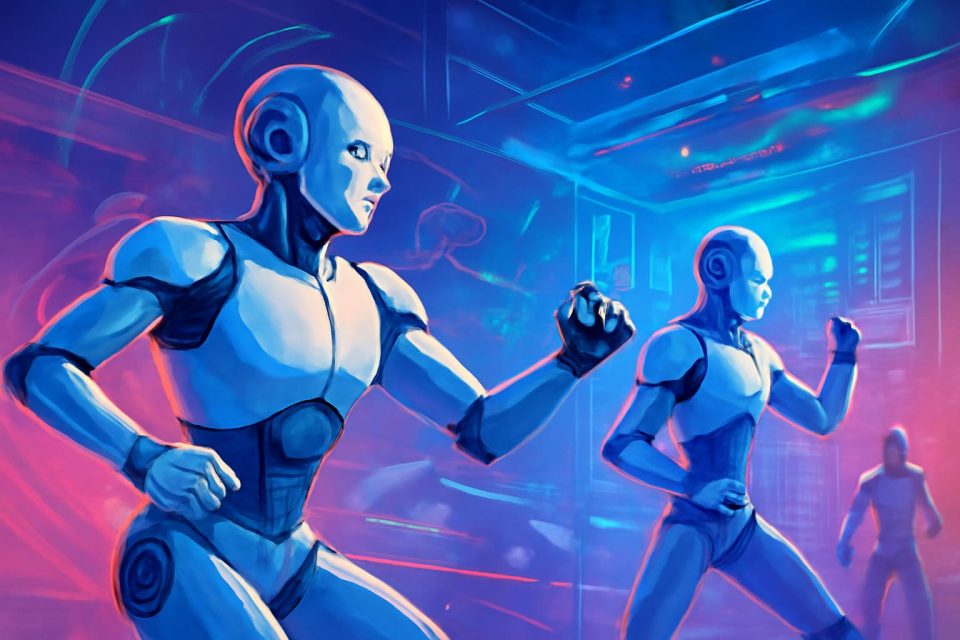
The process began with teaching a robot to dance, leveraging the complexity of human motion as a benchmark for robotic movement. This involved capturing human motion using the OptiTrack mocap system and mapping it onto a digital twin of the robot.
Key components of the workflow include:
- Utilizing MuJoCo, an open-source physics engine, for real-time validation of movement accuracy.
- Transitioning from single on-premises GPUs to G4 VMs, which enabled a peer-to-peer data transfer architecture, significantly reducing training time.
- Achieving over a 10x speed increase, bringing training durations down to less than one hour.
Addressing the Sim-to-Real Challenge
One of the critical challenges in robotics is the "sim-to-real" gap, where models that perform well in simulations may fail in real-world applications due to unmodeled physics or sensor inaccuracies. WPP's approach involved running billions of simulations to refine the reinforcement learning model, which was then deployed to the robots.
This model incorporates real-time data from the robots to adjust movements dynamically, ensuring that learned behaviors translate effectively to physical environments.
Future Directions
To support broader access to advanced robotic motion research, Unitree has released its reinforcement learning code on GitHub. Coupled with the NVIDIA Isaac Sim image available on Google Cloud Marketplace, this initiative facilitates immediate access to cutting-edge robotics technology.
WPP's advancements in humanoid robot training not only enhance creative capabilities in the entertainment sector but also offer insights applicable across various industries facing similar challenges in robotics.