Synopsis
Design giant Canva unveiled its AI-native platform, Canva 2.0, powered by its own models. This shift transforms it into an AI platform with design tools, aiming for the next generation of users. The company also introduced a new AI Pass for enhanced AI capabilities.Listen to this article in summarized format
Canva is already the third most used AI platform globally, behind ChatGPT and Google Gemini, as well as the fastest-growing in customer spend on AI products among leading software companies, according to research by VC firm Andreessen Horowitz.
At the launch of Canva 2.0, a crowd of 6,000 cheered for Melanie Perkins, the 38-year old cofounder and chief executive of Canva who took the stage in a shimmering blue suit at the YouTube Theatre, Hollywood Park, alongside cofounders Cliff Obrecht and Cameron Adams.
ET explains Canva’s strategic pivot and important features unveiled at the fourth edition of Canva Create conference in Los Angeles:
What is Canva 2.0?
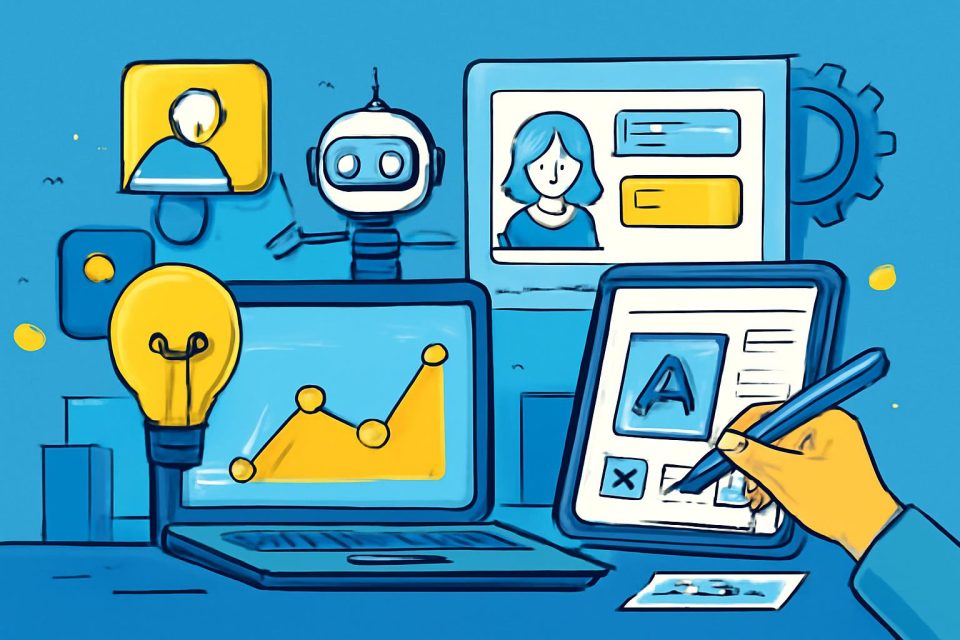
Canva is bringing productivity and creativity together in a shared workspace. It is turning design into a chat-based experience where users can generate and edit using prompts.
Web research is also built into the design process. It is also introducing ‘Living Memory’, a feature which remembers users’ style, brand, past designs and automatically applies it to new projects. For businesses, brand intelligence can also be seeded into the AI. Using connectors, Canva is integrating with tools such as Slack, Gmail, Google Drive and Zoom, allowing it to pull data from work apps.
How does that impact pricing?
The platform shift has not changed Canva’s core freemium monetisation model. It continues to offer the Pro subscription priced at $18/month and Teams/Business subscription at $25/month along with custom enterprise plans. With the new launch, Canva is also introducing a special AI Pass for $100 per month, which offers Pro users 40 times more AI and Business users 20 times more AI.
This is essentially a “universal credit model” which grants more free credits as the user increases consumption. Earlier, users paid fixed plans to unlock features; now, they also get a pool of credits (or tokens) that are consumed as they use AI tools. Free users get limited access to try AI, while paid users receive more credits depending on their tier. For Canva, this means revenue is no longer just about subscriptions, it increasingly scales up with how much users actually use AI on the platform.
The investments in AI Research
Canva started re-architecting its platform in 2024, with the acquisition of Leonardo AI, an image generation platform. It also decided to step away from costly frontier AI models from the likes of OpenAI and Anthropic towards investing in its own AI research.
Its AI division, the Canva Original Research and Exploration (CORE), has 300 employees including 100 in-house researchers. Canva’s unique “design models” (which solve visual AI problems such as removing background) are up to seven times faster and 30 times cheaper than comparable frontier alternatives, the company said. It also invested in self-hosted training, large-scale reinforcement learning and optimised inference infrastructure to make these models compact and cost-efficient. Canva is also working with leading AI chipmakers to produce customised chipsets and has started deploying its AI models with some of those.
The growth story
Launched in 2013, Canva has raised roughly $612 million from marquee investors including Blackbird Ventures (largest institutional shareholder), Sequoia Capital, Felicis Ventures, General Catalyst, JP Morgan, Fidelity and Franklin Templeton. The company achieved profitability in 2017 and unicorn status in 2018.
In 2024, Canva acquired Affinity, a suite of professional creative software tools, and decided to make it free forever. The deal marked one of Canva’s biggest strategic moves to compete with traditional Adobe tools such as Photoshop, Illustrator and InDesign.
Canva has crossed more than 265 million monthly active users globally, of which 31 million are paying users, up 4 million from 2025.. The company reported annualised revenue of more than $4 billion, growing at 40% year-on-year, with over $500 million contribution from the enterprise segment which is growing at 100% annually. Its global workforce has expanded to around 5,300 employees, with new office openings in Mexico, Türkiye and Italy.
Canva is expected to list on the Nasdaq rather than the Australian ASX to access deeper liquidity. In 2024, it hired Zoom chief financial officer Kelly Steckelberg, signalling its preparation for public markets. In 2025, it made an employee tender offer which allowed staff to sell up to $3 million in vested equity, a common step taken 12-18 months before a public debut.
(The reporter was at the Canva Create event in Los Angeles at the invitation of Canva)