Synopsis
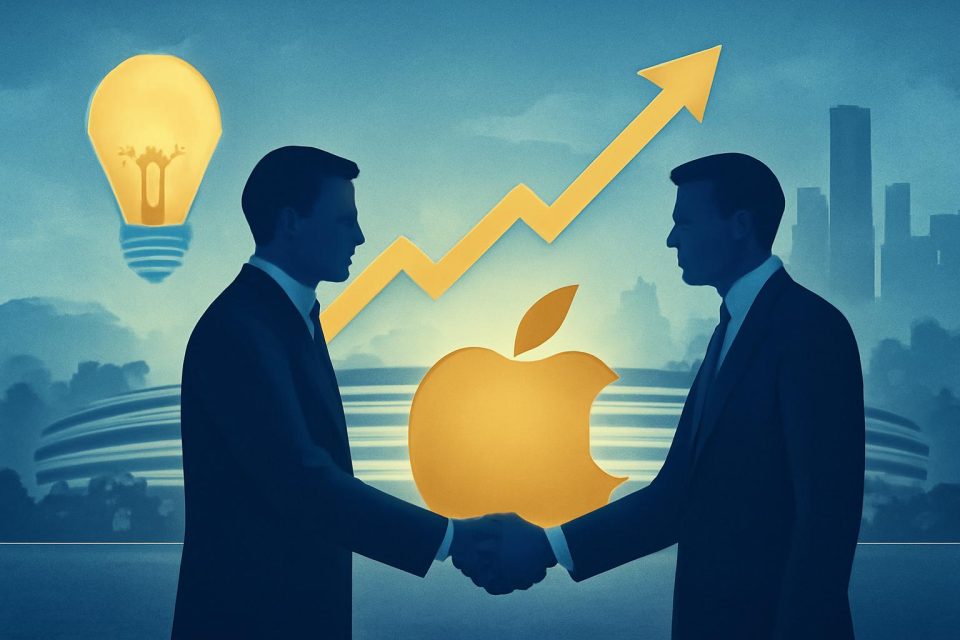
Tim Cook, who helped make Apple one of the world’s most valuable firms, will step down as chief executive after 15 years in the role. On September 1, he will hand over the reins to John Ternus.Listen to this article in summarized format
On September 1, he will hand over the reins to John Ternus.
Cook’s exit marks the end of a nearly three-decade journey at Apple, where he played a central role in scaling the company and strengthening its global dominance.
Cook’s journey
Cook joined Apple in 1998, taking charge of its worldwide sales and operations.
In 2009, he began overseeing day-to-day operations when cofounder Steve Jobs stepped back due to complications from pancreatic cancer.
In 2011, just months before Jobs’ death, Cook formally took over as CEO.
At the time, Apple’s annual revenue stood at $108.25 billion. By the most recent fiscal year, that number had climbed to $416.1 billion, reflecting nearly fourfold growth.
The company’s market capitalisation also followed a similar trajectory. It has risen from $376 billion in 2011 to more than $4 trillion today, an increase of about 20 times. During Cook’s tenure, Apple also became the first publicly traded company to cross the $1 trillion valuation milestone.
Apple is now the world’s second most valuable company, behind Nvidia.
Products and expansion
Cook’s leadership saw strong growth across Apple’s core product lines, including the iPhone, iPad, and Mac. He also oversaw the launch of new hardware categories such as the Apple Watch and AirPods.
Parallely, Apple expanded into services. It introduced Apple Pay, Apple TV, and Apple Music, building a broader ecosystem around its devices.
These services were tightly integrated with Apple’s proprietary operating system software, including macOS and iOS, helping create a seamless user experience across products.
Challenges
However, not every initiative during Cook’s tenure delivered the desired results.
Apple exited its electric vehicle effort, Project Titan, in February 2024 after spending more than $10 billion, with some estimates suggesting even higher costs.
The Vision Pro headset also struggled to gain traction. Reports indicated that production of its first-generation model was halted in early 2026 due to weak demand and rising inventory.
In 2012, the launch of Apple Maps was met with widespread criticism over inaccuracies. Cook later issued a public apology to users.
More recently, Apple has faced concerns over its pace in adopting generative artificial intelligence. Investors have increasingly called for faster progress in this area. Meanwhile, OpenAI, Anthropic, and Alphabet have introduced major AI-driven products.
What next?
After stepping down as CEO, Cook will move into the role of executive chairman.
Ternus, who will take over as chief executive, is currently 50 years old, the same age Cook was when he assumed the leadership role in 2011. He will also join Apple’s board on the same day.
Ternus has been leading work on new product categories, including AI-focused wearables and home devices. These include next-generation AirPods, smart glasses, and camera-enabled hardware.
Going forward, given the timing, Ternus will be responsible for shaping Apple’s artificial intelligence strategy and deciding how the company integrates these technologies into its products.
In a parallel development, Johny Srouji, Apple’s chief hardware officer, shared details of an internal restructuring in an email to employees. The organisation will now be divided into hardware engineering, silicon, advanced technologies, platform architecture, and project management teams.
The move is aimed at simplifying operations while expanding the workforce by thousands of employees.
The restructured teams will oversee engineering across major products, including the iPhone, iPad, and Apple Watch, as Apple continues to invest in hardware innovation.
Interestingly, Apple is marking its 50th anniversary this year at a time when the tech industry is being reshaped by artificial intelligence. The company now faces a key test: showing it can still deliver breakthrough innovations, much like it did under Jobs.