Synopsis
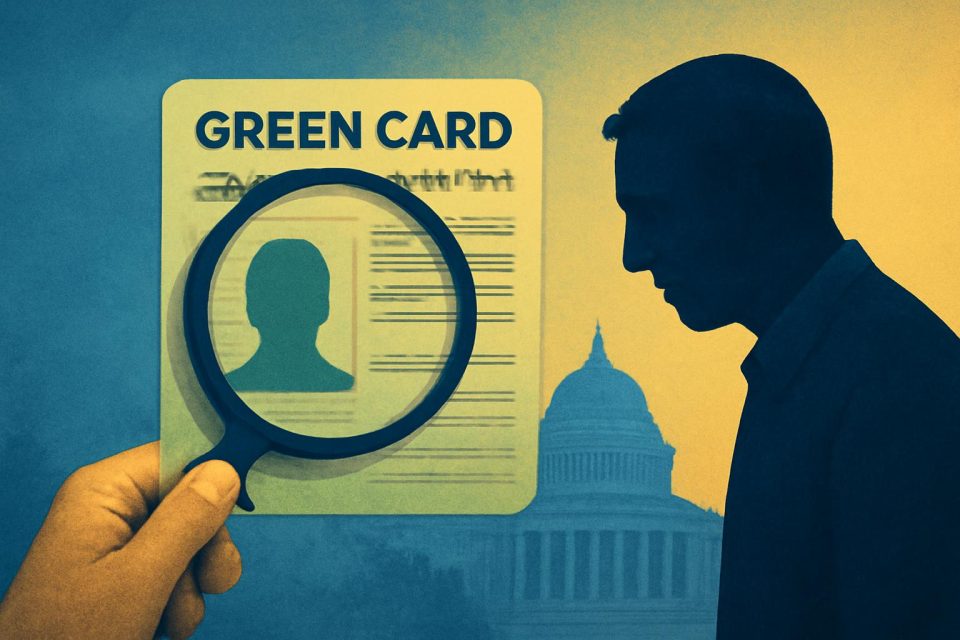
USCIS director Joseph B Edlow this weekend said the agency will reopen old cases to vet Biden-era green cards for fraud. This comes amid tighter scrutiny of issuance of green cards and a rise in denial rates.Listen to this article in summarized format
USCIS director Joseph B Edlow this weekend said the agency will reopen old cases to vet Biden-era green cards for fraud. This comes amid tighter scrutiny of issuance of green cards and a rise in denial rates.
According to Migration Policy Institute (MPI) estimates, India was the third largest country of origin for immigrants who obtained a green card in FY2023, the most recent year for which data are available, after Mexico and Cuba. Of the nearly 1.2 million people who received green cards that year, about 78,100, or 7%, were from India.
But Indians are unlikely to be initial targets of fraud investigations, immigration experts said.
“That said, this administration is actively looking for fraud cases and want higher numbers to reinforce their argument,” ,” Xiao Wang, CEO of Boundless Immigration, told ET. “Therefore, each case of Indian nationals being caught committing fraud will increase the likelihood of increased vetting of other Indian cases.”
In addition, the move may have a chilling effect on the naturalisation process. Even legal immigrants who have successfully managed to obtain a green card will not feel secure in the country, Wang said.
“I suspect a general reduction of immigration interest and increase in emigration due to all of these policies taken as a collective,” he said.
Immigration attorney Kevin J Andrews said applicants are likely to see longer scrutiny on international travel at ports of entry and harder naturalisation interviews if there are inconsistencies between prior filings.
Rising scrutiny
Denial rates for green card applications under high-skilled categories such as EB-1A and EB-2 NIW (national interest waiver) have risen in recent months. The latter refers to permanent residency routes for advanced degree holders working in areas of national interest.
For EB-1As, denial rates have more than doubled across the board, with approval rates dropping from 70% to 60% (estimated) and request for evidence (RFE) rates have more than doubled, Wang said.
Andrews said NIW approval rates fell from about 71% in FY2024 to 55% in FY2025, and to under 36% in the fourth quarter FY2025.
Poorvi Chothani, immigration attorney and managing partner at LawQuest, said unlike earlier, applicants for green cards and naturalisation must now proactively demonstrate good moral character. In certain instances, they might need to include affidavits from neighbours or through their church or temple activities.
Gnanamookan Senthurjothi, founder of The Visa Code, an immigration platform, said there have been two instances where marriage-based green card petitions have received RFEs, which is uncommon. “We have also seen harder interviews for naturalisation, and higher scrutiny even for minor violations,” he added.