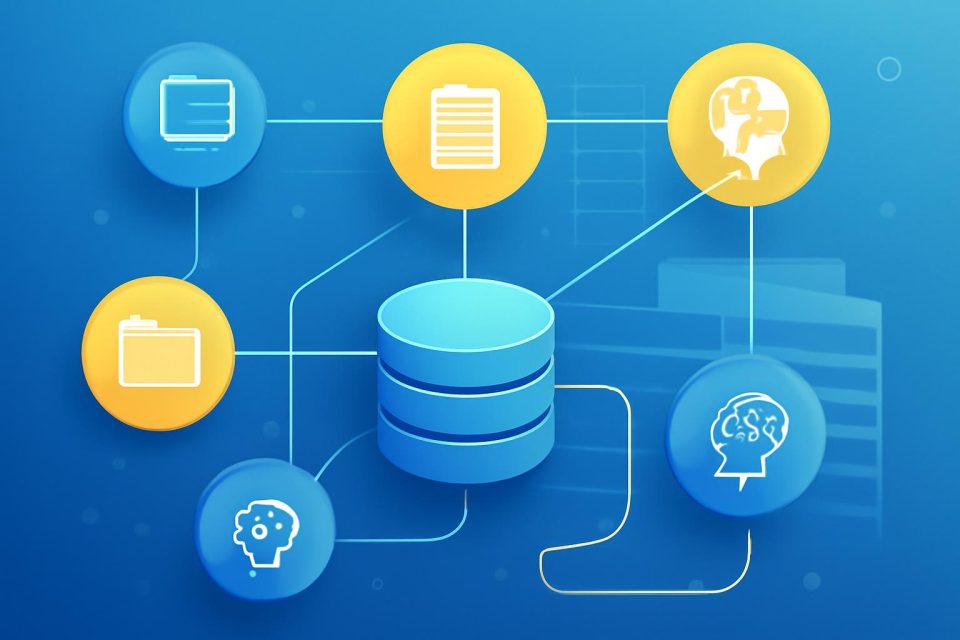
Google Cloud has introduced the Knowledge Catalog, a transformative tool designed to enhance data management across enterprises. This new offering addresses the limitations of traditional data catalogs, which often focus on technical structures rather than the contextual understanding needed by AI agents.
Bloomberg Media is among the early adopters of the Knowledge Catalog, utilizing it to integrate enterprise metadata and business context. This integration has enabled the launch of their Data Access AI Agent, which helps stakeholders navigate their data lake and derive insights with confidence.
Core Features of the Knowledge Catalog
The Knowledge Catalog is built on three foundational pillars:
- Aggregation: Unifying context and resolving conflicting definitions.
- Enrichment: Generating continuous meaning and mapping relationships.
- Search: Empowering agents with high-precision retrieval.
Aggregation: Building a Unified Context
The Knowledge Catalog aggregates data from various Google and partner platforms, creating a comprehensive source of truth. Key features include:
- Broad Metadata Aggregation: Automatically harvesting technical metadata from systems like BigQuery and AlloyDB.
- Enterprise Connectivity: Using Google Cloud Lakehouse to interconnect key enterprise systems.
- LookML Agent: Automating the generation of business-ready semantics from strategy documents.
- BigQuery Measures: Embedding programmatic business logic into the SQL engine for consistent calculations.
- Data Products: Packaging data assets with built-in governance for reliable production use.
Enrichment: Continuous Learning and Meaning Generation
The Knowledge Catalog enhances data through continuous enrichment, moving beyond manual curation. Features include:
- Smart Storage: Automatically tagging and enriching files with metadata upon upload.
- Deep Multimodal Metadata Extraction: Integrating with Gemini to extract business information from unstructured data.
- Automated Context Curation: Generating natural language descriptions for datasets and relationships.
- Verified Queries: Providing SQL patterns to prevent errors in data retrieval.
Search: High-Precision Retrieval
The Knowledge Catalog offers advanced search capabilities, crucial for the efficient functioning of AI agents:
- High-Precision Semantic Search: Leveraging Google's search technologies for fast and relevant results.
- Access Control-Aware Search: Ensuring agents only retrieve data they are authorized to access.
- Measurable Context Evaluation: Allowing teams to test and optimize context construction strategies.
Implications for Businesses
The introduction of the Knowledge Catalog is significant for organizations looking to harness their data effectively. By providing a unified context and enriching data continuously, businesses can improve the accuracy of insights generated by AI agents.
Next Steps
Organizations interested in leveraging the Knowledge Catalog can begin integrating it into their data management strategies to enhance their operational efficiency and insight generation.