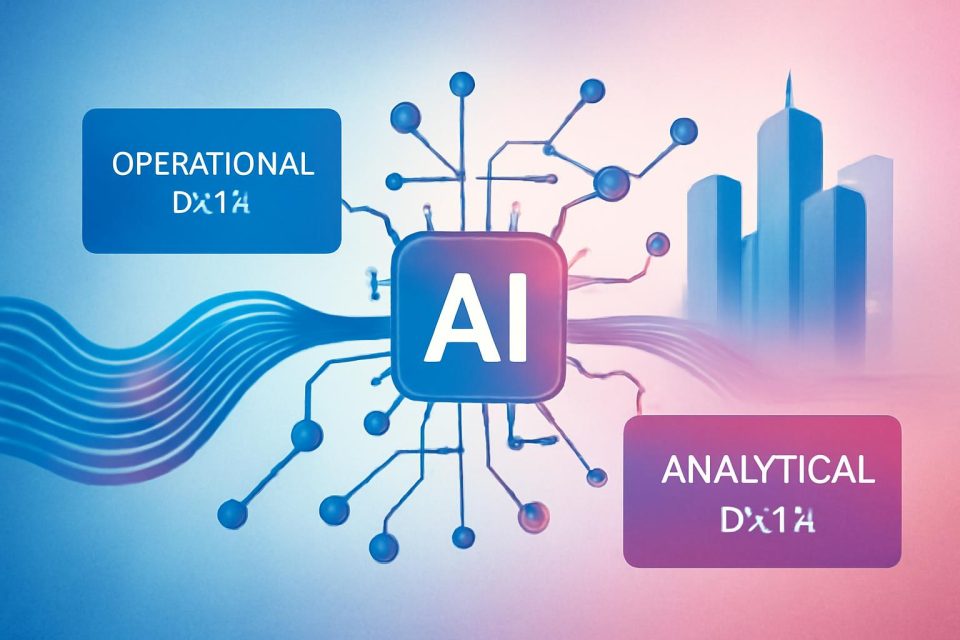
Google Cloud has unveiled its Agentic Data Cloud, a transformative architecture designed to merge operational and analytical data. This new capability aims to eliminate traditional silos that have long hindered real-time decision-making in AI applications.
Historically, data systems have created barriers between platforms that generate insights and those that implement actions. This separation has resulted in delays that prevent timely responses from AI agents. The Agentic Data Cloud addresses this issue by fostering a closed-loop architecture that allows for immediate action based on both historical and real-time data.
Empowering Real-Time Decision-Making
To function effectively, AI agents need access to both operational signals and historical data. The Agentic Data Cloud facilitates this by offering integration models that support data federation, reverse ETL, and real-time ingestion. This enables agents to make informed decisions quickly.
For instance, agents can now retrieve historical data directly from AlloyDB through Lakehouse federation, allowing for instant queries without the need for complex data movement processes. Conversely, Reverse ETL for BigQuery enables the rapid delivery of analytical insights back into operational databases, ensuring agents can access critical information at conversational speeds.
Streamlined Data Processing
Teams conducting real-time analytics often face challenges when transferring data into analytical systems. With the Spanner Columnar Engine, users can execute analytical queries significantly faster while maintaining the integrity of production workloads. This advancement minimizes lag and enhances overall performance.
Moreover, the reasoning loop is completed by capturing real-time actions for further analysis. Datastream for Lakehouse facilitates Change Data Capture (CDC), streaming operational changes directly into Lakehouse tables for immediate availability in BigQuery, which is essential for machine learning and real-time analytics.
Unified Governance for Reliable Agents
To combat inconsistencies in data definitions and ownership, Google Cloud is expanding its Knowledge Catalog. This tool integrates with various databases, providing a unified view of the data landscape. By aggregating context from multiple sources, it creates a reliable foundation for AI agents.
For example, Seven-Eleven Japan has successfully implemented a scalable data platform using Spanner and BigQuery to gather insights from over 21,000 stores, preparing for future expansion.
Advanced Reasoning Capabilities
Moving beyond basic functionalities, the Agentic Data Cloud allows AI to reason across diverse data dimensions. By embedding vector and full-text search capabilities within operational databases, agents can perform hybrid searches that combine keyword relevance with semantic understanding.
Additionally, the integration of graph and vector support across BigQuery and Spanner enhances the ability of agents to trace user intent through historical data relationships, facilitating faster decision-making without data movement.
Optimized for Performance
The Agentic Data Cloud is designed to support high-performance applications without sacrificing operational efficiency. Built on open standards and governed by universal semantics, it provides the necessary speed and throughput for developing next-generation applications.
Next Steps: Organizations looking to leverage these capabilities can explore the AlloyDB AI documentation and begin setting up federated queries to enhance their data management strategies.