Synopsis
China's NDRC has blocked Meta's $2 billion acquisition of AI firm Manus, citing "laws and regulations." This move signals Beijing's intent to prevent the outflow of its top AI talent and technology, even after companies "Singapore-wash" to access foreign capital.Listen to this article in summarized format
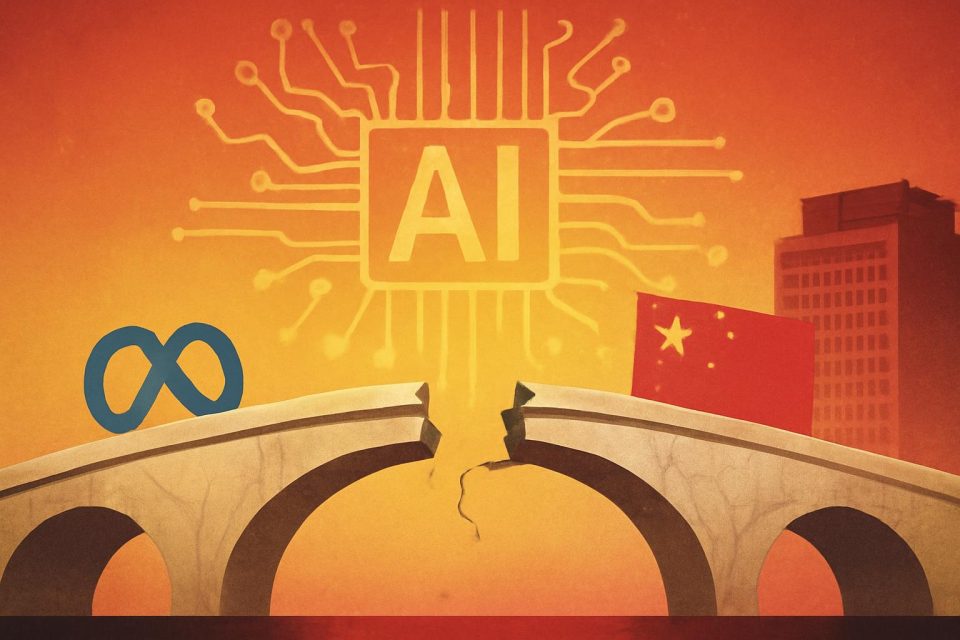
Manus was born in China, repackaged in Singapore, and sold to Silicon Valley giant Meta for $2 billion amid one of the most competitive geopolitical rivalries between the two superpowers. Then Beijing slammed the door.
The ruling, issued in a single line citing only "laws and regulations", was months in the making. But why was it done?
What is Manus?
Manus burst onto the global scene in early 2025 when it unveiled what it called the world's first fully autonomous AI agent: software capable of making travel bookings, writing and running code, analysing financial data, and executing complex multi-step tasks with minimal human input.
The company was founded in China by CEO Xiao Hong and chief scientist Ji Yichao, with teams initially split between Beijing and Wuhan.
Sensing the winds shifting in the US-China tech war, Manus's founders relocated to Singapore in mid-2025, laid off China-based staff, shuttered their Chinese social media accounts, and repositioned themselves as a Singaporean company.
In tech circles, this is called "Singapore-washing", and Manus executed it more visibly than any startup before them. In doing so, they raised eyebrows in the Chinese government.
The move worked for a short time, with the startup getting backing from San Francisco venture firm Benchmark, and then Meta came calling. In December 2025, the two companies announced a deal valuing Manus at $2 billion. By March this year, more than 100 Manus employees had moved into Meta's Singapore office.
China puts a stop
Within days of the December announcement, China’s commerce ministry said it would investigate whether the deal violated the country's laws on export controls, technology transfers, and overseas investment. In March, regulators summoned Manus cofounders to a meeting in Beijing with NDRC officials. They were also told to not leave the country while the review was ongoing.
Stopping the talent outflow
The Manus issue is not just about this particular deal, but one of China's major concerns and a pattern that has alarmed its policymakers for years. The country's best AI minds are leaving for American companies and institutions.
Per a Carnegie Endowment study published in 2025, 87 of the top 100 Chinese AI researchers working at US institutions in 2019 had remained in the States. Those numbers haunt Chinese tech policy, as the country prepares for a cutthroat AI race.
Beijing has poured billions into domestic AI development, built out research institutes, and attempted to engineer a homegrown AI ecosystem capable of competing with OpenAI and Google. But the pull of Silicon Valley with its capital and its compensation has resisted these efforts.
The Manus case brought the fear to the fore, that Chinese founders would simply incorporate offshore, make themselves Singaporean, and sell their technology and talent to American acquirers.
A warning
The Singapore-washing model quietly embraced by a generation of Chinese tech entrepreneurs hoping to access foreign capital while staying out of Beijing's crosshairs, has been invalidated. Beijing has effectively said that moving headquarters does not mean being out of reach. If the technology, the data, and the talent were built in China, China will have a claim on them.
Alfredo Montufar-Helu, a managing director at Ankura China Advisors, said that AI has become central to competition between the world's two largest economies, with controls that were once focussed on semiconductors now extending into AI.
"China is saying we will prevent foreign acquisition of assets we consider important for national security — and AI is now clearly one of them," he told Reuters.
Meta, on its part, had maintained that "the transaction complied fully with applicable law" and that it anticipated "an appropriate resolution." They may not like the resolution which has come today.