By Deepa Seetharaman and Max A. Cherney
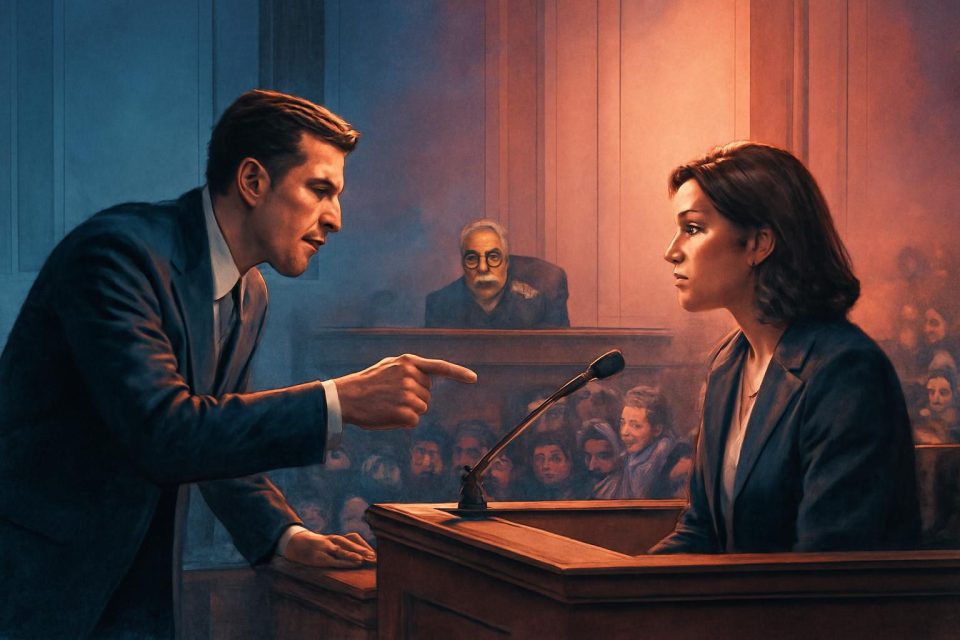
OAKLAND, California, - Elon Musk on Wednesday accused a lawyer for Sam Altman of trying to trick him during cross-examination at a high-stakes trial over Musk's lawsuit alleging OpenAI ditched its mission to build artificial intelligence for the public good.
William Savitt, a lawyer for OpenAI, told Musk his questions about the benefits Musk reaped by donating $38 million to OpenAI were simple, and that Musk's responses should be as well.
"Your questions are not simple. They're designed to trick me," Musk, the CEO of Tesla and SpaceX, said in his second day of testimony before a nine-person jury in Oakland, California, federal court.
Musk has accused OpenAI, its co-founder and Chief Executive Altman, and its President Greg Brockman of wooing his donations by promising to build a nonprofit to develop AI responsibly, before pivoting to create a for-profit entity in 2019 to enrich themselves.
OpenAI has argued that Musk is motivated by a compulsion to control the company. Savitt told jurors during his opening statement on Monday that Musk helped finance OpenAI's early growth and pushed it to become a for-profit business, one he might eventually lead as CEO.
OpenAI has said it created a for-profit entity in 2019 to allow it to buy computing power and pay top scientists.
Seated in the courtroom audience, Altman at times bent his head down, and at other times looked at the evidence being shown on a screen.
MUSK SAYS ALTMAN NOT 'HONEST'
The trial highlights the depth of the rupture between Musk and Altman. The two Silicon Valley icons once partnered in the quest to develop the fast-growing AI technology, a pillar of growth in the U.S. economy that is also fueling anxiety about job losses.
The pair co-founded OpenAI in 2015 to create a benevolent steward of the technology and fend off rivals such as Alphabet's Google. Musk left OpenAI in 2018. Microsoft, also a defendant, invested $10 billion in OpenAI in 2023.
Earlier on Wednesday, jurors saw an email Musk sent to Altman and Brockman in 2017, referring to himself as a "fool" for providing them funding for what he believed was a nonprofit venture.
"I felt like they had not been honest with me," Musk said under questioning by his lawyer, Steven Molo. "What they really wanted to do was create a for-profit where they had as much shareholder ownership as possible."
Musk, wearing a dark suit over a white shirt, glanced at the jury occasionally as he spoke.
Savitt asked Musk whether he received tax benefits from his donations. Musk called the question misleading, comparing Savitt's yes-or-no questions to asking someone, "Have you stopped beating your wife?"
That comment prompted U.S. District Judge Yvonne Gonzalez Rogers to step in. "We're not going to go there," the judge said.
OPENAI SAYS MUSK SEEKS TO BOLSTER XAI
Musk testified that Microsoft's investment made him concerned the tech behemoth had "captured" OpenAI.
"At a $10 billion scale, there's no way Microsoft is giving that as a charitable donation," Musk said under questioning by Molo.
Jurors saw text messages Musk and Altman exchanged after news broke of Microsoft's potential investment. Musk told Altman the move felt like a "bait and switch." Altman responded, "I agree that this feels bad," and then offered to allow Musk to buy a stake in OpenAI.
"Frankly, it felt like a bribe," Musk testified.
Musk testified that he left OpenAI's board to focus on SpaceX and Tesla. He said he stopped funding OpenAI in 2020.
Lawyers for OpenAI and other defendants have argued that Musk is seeking to bolster his own AI company, SpaceX unit xAI, which lags OpenAI in user adoption. They have also said AI safety was not a priority for Musk when he was with the company.
Musk acknowledged on the stand that xAI had a smaller market share than OpenAI.
MUSK SEEKS $150 BILLION IN DAMAGES
The trial comes as OpenAI prepares for a potential initial public offering that could value it at $1 trillion, Reuters has reported. The company also faces growing competition from rivals, including Anthropic, while a Wall Street Journal report that OpenAI had missed some internal performance targets weighed on the tech-heavy Nasdaq Composite on Tuesday.
Musk is seeking $150 billion in damages from OpenAI and Microsoft, with any award going to OpenAI's charitable arm. He also wants OpenAI to revert to a nonprofit, with Altman and Brockman removed as officers and Altman removed from the board.
His claims include breach of charitable trust and unjust enrichment.
OpenAI is currently structured as a public benefit corporation, in which the nonprofit and other investors, including Microsoft, hold stakes.
This article was generated from an automated news agency feed without modifications to text.