Synopsis
Helping enterprises unshackle billions of lines of legacy code they are buried under unlocks opportunities for Indian IT. But firms, especially Indian enterprises, should examine their AI readiness, writes ET.Listen to this article in summarized format
Assembly Elections 2026Election Results 2026 Live Updates: Who's ahead in which stateWest Bengal Election Results 2026 Live UpdatesTN Election Result 2026 Live Updates
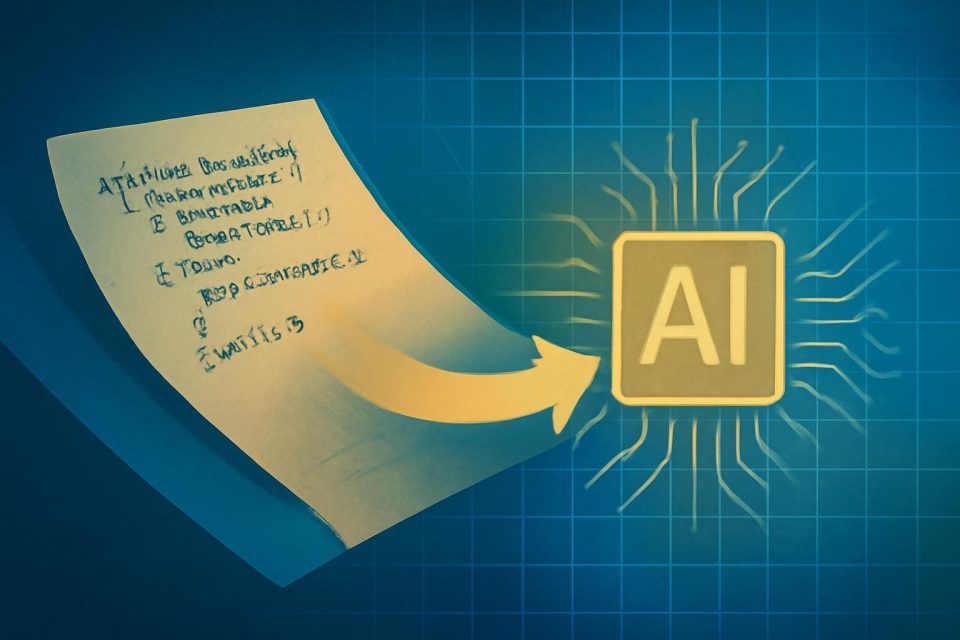
The 67-year-old programming language is considered as the hidden backbone of the digital economy. Be it banking transactions or power distribution or government infrastructure, billions of codes behind several vital functions have remained untouched for decades, thanks to the terrifying complexity of changing software systems built using COBOL decades ago.
Now, GenAI promises to replace legacy software, rewrite codes and modernise systems at a speed and cost unimaginable till recently. A clean erasure of technical debt in weeks. But what is technical debt in the first place? It is the hidden cost of years of patchwork fixes, messy or outdated code, legacy systems, disconnected tools, and poor or missing documentation that accumulates over time. As it builds up, it becomes a drag on the organisation, slowing innovation, driving up costs, and making it increasingly difficult to adopt newer technologies like AI.
The opportunity unlock
Resolving this tech debt or legacy modernisation has been a core services line of India’s $280 billion IT services sector. AI has both a disruptive and innovative impact on legacy modernisation. Large players like Tata Consultancy Services, Infosys, HCLTech, TechMahindra and LTM have acknowledged revenue deflation in the segment. But they are also winning larger deals because of enhanced scope of work.
“Legacy modernisation has moved from “lift and shift” to full-stack reinvention,” explained Phil Fersht, chief executive of HfS Research. “We are seeing more scaled programs, especially in banking, insurance, and telecom, where estates are complex and regulatory pressure is high. Deal sizes are expanding, not just because of migration, but because clients are bundling modernisation with cost takeout and business transformation.”
Customer Relationship Management (CRM) software leader Salesforce said global C-suites are no longer viewing modernisation as a cost-absorption exercise.
“Historically, technical debt was seen as a back-office burden; today, it is the primary friction point slowing the shift toward an autonomous future,” said Prakash Thekkatte, senior vice president - software engineering, Salesforce India. “You cannot layer transformative AI onto a foundation of fragmented silos. To lead in the agentic era, organisations must first solve the 'data debt' equation.”
HDFC Bank began modernising its technology stack in 2020. Its internal Neev platform brings AI models, APIs, controls into one place and connects AI agents to both legacy and modern systems.
Ramesh Lakshminarayanan, chief information officer (CIO) at HDFC Bank said that although AI coding assistants have made modernising legacy systems like COBOL easier, it cannot rely on code generation alone. “We have to make sure the final system is safe, well‑designed and meets all regulatory and security requirements,” he said.
“Today, about 35-40% of our coding is already done with AI…that meets security and regulatory norms,” he said.
Enterprise Resource Planning (ERP) software leader SAP said that modernisation has become a major catalyst of SAP’s AI pipeline. “...we are seeing investments set aside with a focus on reducing technical debt, move to standard AI enabled processes, workflows and archive historical data from system of records to system of intelligence with an objective to maintain a clean and lean digital core,” said Mukesh Kumar H, head-customer advisory, SAP India.
He explained that AI has made the cost of carrying technical debt far more visible and customers realise that fragmented landscapes and inconsistent data directly limit their ability to scale.
Salil Parekh, chief executive, Infosys explained that for a transportation sector client Hertz, “we helped with a legacy migration to bring 3 million lines of COBOL code to a modern microservices environment using AI foundation models. The cost was 60% lower, the timeline was 60% quicker,” he said in a post earnings call.
“What we are seeing is a decisive move away from rehosting, lift‑and‑shift, and narrow code conversion to an end‑to‑end re‑imagination of systems,” Satish HC, executive vice president & chief delivery officer, Infosys, told ET.
“AI is enabling a reliable understanding of complex legacy estates, accelerating timelines, reducing risk, and compressing time‑to‑value. This is unlocking large modernisation programs and enabling enterprises to systematically address deep technology debt at scale, making this a durable growth opportunity for IT services,” he added.
However, these may just be some early signs.
Jimit Arora, chief executive intelligence and advisory firm Everest Group said that clients are not jumping all-in yet and their appetite to touch mission critical systems remains low. “With regards to COBOL, because of growing compute and cloud costs, clients who are on mainframes are very happy with the level of cost and performance. So even if capabilities exist, clients need a real business reason to switch away from the mainframe environments,” he added.
The AI “code sprawl”
While AI coding is compressing cost and timelines, its ungoverned use is in fact compounding technical debt by causing “code sprawl”, studies have found. This occurs when developers use multiple agents and tools like GitHub Copilot, Claude Code or Codex to churn out massive amounts of code quickly, without any centralised strategy or architectural oversight.
According to a HfS survey of 123 large enterprises, 43% have reported AI already creating new debt. Gartner projected that software defects will rise by 2,500% by 2028 as a direct byproduct of rapid “prompt-to-app” development scaling without proper architectural governance.
“The challenge is the pace of AI innovation means ‘next gen’ systems risk becoming ‘legacy’ before they even generate value,” said Mahesh Makhija, Leader and Technology Consulting Partner, EY India. “Enterprises were still rolling out chatbots when agentic AI showed up. Now we have coding agents that go beyond the chatbot and copilot model. If not approached thoughtfully, this just creates a new layer of debt on top of the old.”