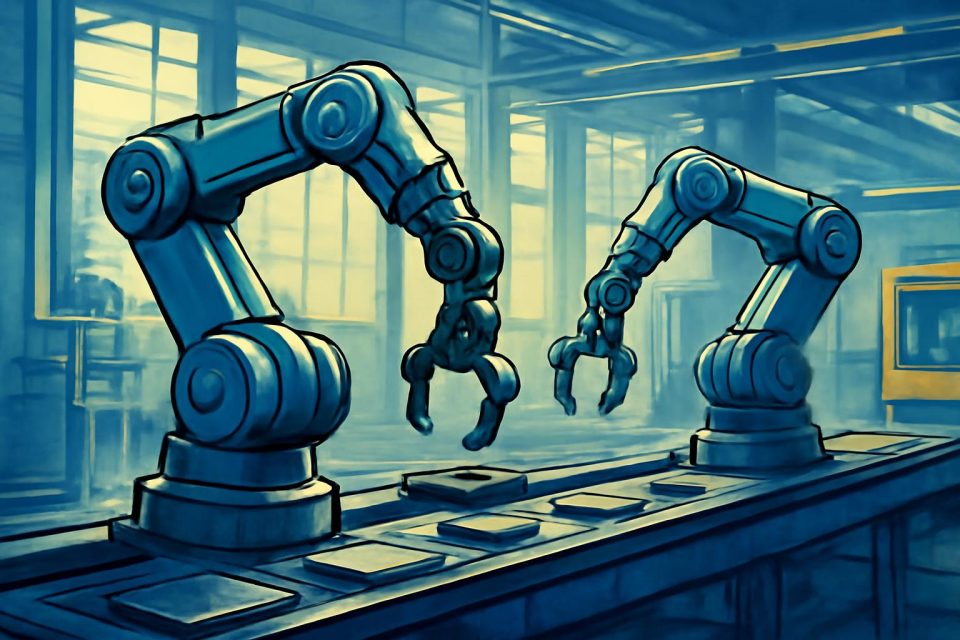
Perceptyne is revolutionizing the manufacturing sector with its cutting-edge dual-arm robots designed for automation. These robots are engineered to handle complex tasks, significantly reducing operational costs while offering flexible deployment options.
Key Features of Perceptyne Robots
- Dual-Arm Design: Enables intricate manipulation and versatility in various manufacturing processes.
- Cost Efficiency: Reduces labor costs and improves productivity.
- Flexible Deployment: Easily integrated into existing workflows, adapting to different manufacturing environments.
Why It Matters
The introduction of Perceptyne's robots addresses the growing demand for automation in manufacturing. As industries seek to enhance efficiency and reduce costs, these robots provide a viable solution that can adapt to various needs.
What to Expect
Manufacturers adopting Perceptyne's technology can expect:
- Increased operational efficiency.
- Enhanced precision in production tasks.
- Reduced dependency on manual labor.
Implementation Insights
To successfully integrate Perceptyne's robots into a manufacturing setup, consider the following steps:
- Assess current manufacturing processes to identify automation opportunities.
- Plan for training staff to operate and maintain the robots.
- Monitor performance metrics post-implementation to gauge effectiveness.
Conclusion
Perceptyne's dual-arm robots represent a significant advancement in manufacturing automation, offering businesses a pathway to enhance productivity and reduce costs. As industries continue to evolve, embracing such innovative solutions will be crucial for maintaining competitive advantage.