Synopsis
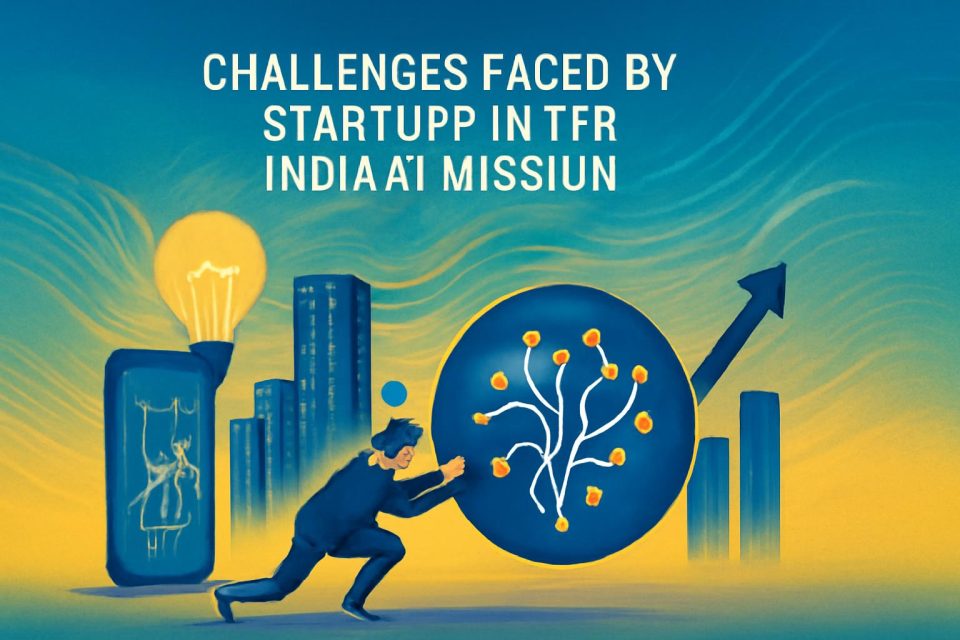
IndiaAI mission startups face delays in formal agreements, impacting non-compute support and raising IP concerns. While compute access is provided, founders report operational hurdles and potential timeline shifts due to pending MoUs. The government is exploring advance payments to mitigate these issues.Some of them said this has also given rise to concerns over intellectual property rights. Others said original timelines may get pushed back, adding that, as far as they were aware, none of the 12 has signed an accord with the Centre but ET could not independently verify this claim.
While the total subsidy for the 12 companies has been pegged at Rs 2,195 crore, non-compute expenses account for Rs 159.14 crore.
This secondary support of Rs. 159 crore, intended for essential costs such as engineering, salaries, data preparation and storage, is pending as memoranda of understanding (MoUs) haven’t been signed yet, the executives said.
Compute access alone is insufficient without parallel resources for manpower, as managing large-scale workloads requires significant operational spending, especially for smaller firms, they said.
In response to inquiries by the companies, the government informed them on Wednesday that it’s planning to release an advance cash payment toward non-compute costs in return for an undertaking by the startups, as MoU vetting is taking time, some of the founders said.
The IndiaAI mission, run by the Ministry of Electronics and Information Technology (MeitY), didn’t respond to queries.
The government wants to bolster the country’s standing in the AI race that’s dominated by the US and China. Among emerging markets, India is losing out to South Korea and Taiwan due to the perception that the country is a laggard in AI.
Sarvam, which is developing sovereign AI models, was the first to be picked for the list, in April last year. The inclusion of Soket, Gnani and Gan was announced in May. Then came BharatGen, Fractal, Avataar, GenLoop, Zenteiq, Intellihealth (NeuroDx), Shodh, and Tech Mahindra Makers Lab, in September.
“The pace at which AI model development is happening globally is something India needs to match, and probably move even faster on, because we started a little late,” said AI4India cofounder Alok Agrawal.
While established firms with existing capital can better absorb these delays, other AI startups relying on promised government support are finding it difficult to scale teams and utilise the infrastructure effectively, they said.
Some firms are taking non-compute support from the IndiaAI Mission, bigger firms are not. Sarvam, Gnani, Fractal and Tech Mahindra are not getting any non-compute support from IndiaAI, according to data submitted by union minister of state for electronics and information technology Jitin Prasada in the Rajya Sabha. Firms like Genloop and Shodh AI are getting non-compute support in relatively smaller amounts.
IP concerns
A senior executive at one of the startups said negotiations with the government over compute access and intellectual property terms were ongoing as the company builds a foundational model using its own infrastructure. The executive said the current structure of the programme effectively subsidises only a portion of compute costs, while the company continues to bear the bulk of infrastructure, personnel and operational expenses.
“In the second round, the structure changed. They are effectively giving a discount on compute rather than funding the project,” the executive said, adding that government support amounted to less than 20% of the total project cost once non-compute expenses were included.
The executive said this had created friction around IP ownership and operational control, since companies funding most of the project internally wanted greater say over how the models were built and commercialised.
The person added that the company had not yet started using the IndiaAI compute infrastructure, despite being told it could do so.
“We are not comfortable starting before signing the MoU. We want clarity on the terms first,” the executive said.
The executive said the focus had shifted from merely increasing model parameter counts to building “agentic” systems capable of reasoning, workflow automation and contextual decision-making.
Under the IndiaAI Mission, the financial framework for startups building foundational models has been structured as a 60-40 split between recoverables and grants. IndiaAI is currently exploring another structure too, the founders told ET.
Specifically, the government provides 40% of the funding as a grant, while the remaining 60% is a mixture of equity and debt, though the equity component is strictly capped at 10%, with any additional recoverables treated as debt.
The CEO of one of the startups said progress is being tracked through regular meetings.
“There is a cash component as well... which most likely will come once the MoU is signed," the CEO told ET. “But to get people going, they have made available some compute already."
Shift in timelines
The senior executive quoted above also indicated that timelines originally envisioned under the IndiaAI Mission may change as AI development methodologies and infrastructure requirements had evolved significantly since the proposal was first submitted in early 2025.
“The original two-year timeline may shift due to initial challenges in setting up the infrastructure, though I am confident that the model will be submitted before the promised timeline,” he said. “After requesting hundreds of GPUs to power our development, our team received a fraction of that capacity in November on our request,” the CEO quoted above said.
In February, Sarvam AI launched two major foundational large language models (LLMs), Sarvam 30B and Sarvam 105B, at the India AI Impact Summit in New Delhi. Gnani.ai officially launched Inya VoiceOS, a sovereign 5-billion-parameter voice-to-voice foundational model at the time.
Initially inaugurated in September 2024, BharatGen is the first government-funded multimodal LLM initiative. Param-2 text model, a 17-billion parameter model supporting all 22 scheduled Indian languages was formally launched during the India AI Impact Summit in February too.
Sarvam, Gnani, and BharatGen did not respond to queries.