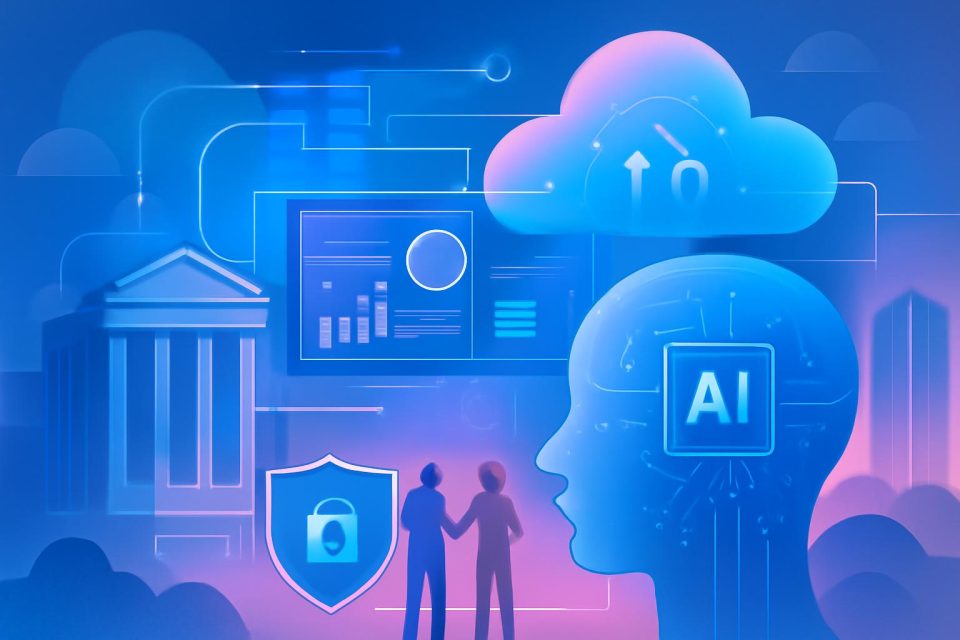
The public sector is witnessing a significant shift as organizations transition from discussing AI's potential to realizing its impact. This transformation requires a robust, scalable, and secure foundation to support full-scale agentic transformation. A recent breakout session titled "From Silos to Synergy: Architecting the AI-Powered Governments of Tomorrow" highlighted how various customer speakers are developing systems that enhance efficiency, security, collaboration, and connectivity within government operations.
Innovations in AI Infrastructure
To meet the demands of AI workloads, advanced architectures like the AI Hypercomputer are being implemented. This system integrates optimized hardware for computing, storage, and networking, along with flexible consumption models. Recent announcements at Google Cloud Next included the introduction of eighth-generation TPUs designed for accelerated training and efficient inference, as well as networking advancements like Virgo Networking.
Additionally, Google Distributed Cloud (GDC) is enhancing capabilities by integrating advanced AI stacks with data management, ensuring sensitive agency data is protected while adopting modern cloud technologies.
Transforming Data Architecture
The agentic era necessitates a shift towards a proactive data architecture, referred to as a "system of action." Innovations such as the Knowledge Catalog, now authorized for FedRAMP High and DoD IL4 & IL5, provide trusted organizational context for data utilization. The introduction of a cross-cloud, AI-native Lakehouse facilitates seamless data access regardless of location.
Notable applications of this data cloud technology include its use at Oak Ridge National Laboratory for mobility data analysis, which aids in disaster response, and at the National Archives, where billions of federal documents are being digitized and cataloged.
Enhancing Security Measures
As public sector organizations navigate complex hybrid and multicloud environments, they face escalating security challenges. To combat these threats, advancements were announced at Google Cloud Next, including a cybersecurity platform that combines Google’s Threat Intelligence with Wiz’s AI Security Platform. This integration aims to enhance threat detection and response capabilities.
New security measures, such as Google Cloud Armor and Model Armor, are now authorized to protect against various cyber threats, ensuring sensitive data remains secure in this evolving landscape.
Real-World Applications
These innovative technologies are already making a difference. At UC Riverside, enhanced computing environments are fostering scientific breakthroughs, while the State of Connecticut is adopting a unified security posture to strengthen its cyber defenses.
Looking Ahead
Organizations interested in learning more about these advancements are encouraged to attend the "Best of Next for the Public Sector" webinar. This event will provide insights into the latest developments from Google Cloud Next and showcase customer stories from various public sector entities.