Synopsis
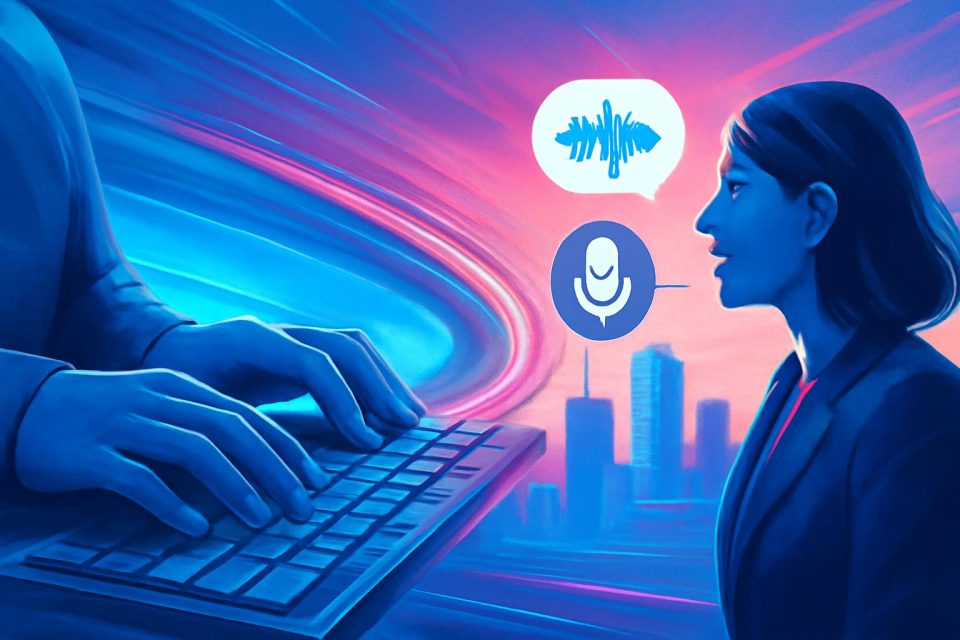
Engineers and founders are ditching keyboards for AI voice commands as speed and convenience reshape workflows. Swathi Moorthy decodes the behavioural shift.If you did not know better, you would think he was giving instructions to a teammate or an intern. But Rohan is speaking directly to Claude Code, using voice instead of typing. His reasons boil down to the speed and efficiency with which tasks can be completed.
Rohan is among a new breed of users who are increasingly using voice as a medium to interact with AI platforms, a behavioural shift the industry is beginning to witness. At least half a dozen people, including engineers and founders ET spoke to, said they now use voice to interact with AI platforms, particularly while coding.
Take Srilalan V, founder of physical AI startup Swift Aero Tech. Srilalan switched to voice a couple of months ago and now finds it impossible to go back to typing.
“Some days I am talking to my Claude Code for hours on end, making changes and fixing things,” he said. According to him, using voice increases the speed at which he is able to code.
“When I type, there is a lag between my typing and the AI platforms responding. But with voice, there is no latency,” he said. In addition, one is able to give detailed instructions and context, unlike text, which is often concise and leaves room for assumptions.
This behavioural shift from text to voice has increased demand for voice dictation platforms such as Wispr Flow, Willow and Superwhisper. Even tech giants such as Google have launched AI Edge Eloquent, a voice dictation app, to compete with these platforms. There are a couple of factors driving this shift.
Sridhar Muppidi, founder of voice AI platform Ello AI, said people think faster than they type or speak, creating a slight delay when interacting with machines. He likened it to the quick commerce era, where the ability to get things delivered in 15 minutes triggered a behavioural change.
“The same thing is happening with AI,” he said.
Tanay Kothari, cofounder of Wispr Flow, said that in the realm of technology, anything that enables people to complete tasks with lower cognitive and physical effort and greater convenience creates value, and voice delivers on all these fronts.
However, unlike a year ago, the rise in adoption is now being driven by improvements in the technology’s ability to understand not just Indian languages, but also diction and nuances, making adoption easier.
It is also about ease of use. Users simply need to sign in and download the platform. No integration is required, as these tools are automatically enabled on platforms that offer a voice chat option.
Enterprise adoption
Wispr Flow’s Kothari said the company is seeing growing interest from large technology firms in the US and is adding 2,000 new enterprises every month. “We are currently deployed at enterprises across industries. We currently work with three of the six large tech giants, where one of them has 45% of their employees using Wispr Flow everyday, ” he told ET.
Apart from technology companies, the platform is deployed in large PE funds and banks. The platform has multiple use cases depending on the company. Engineering teams use it with tools such as Claude Code and Antigravity. Customer support teams use it to respond to clients internally. It is also used within Microsoft Teams and Slack. While demand is growing, privacy concerns remain.
Challenges
One of the biggest concerns around voice technology is privacy. Most AI platforms use data to train their models unless users explicitly opt out. There have been several instances of meeting recordings being leaked online.
While some platforms seek explicit consent before recording, others do not. Kothari said privacy remains a key pillar for Wispr Flow and users have to give explicit consent to store their data locally only.
For instance, platforms such as Fireflies and Otter.ai require bots to join calls, making consent more explicit. In the case of Granola, there are no bots, placing the onus on users to seek consent. The US regulation requires varying degrees of consent when it comes to voice recording.
Currently, there are no clear global rules governing voice dictation. In the US, federal law allows conversations to be recorded if at least one person is aware of the recording.
However, rules vary across states. As of 2025, 13 US states, including California, Connecticut, Delaware, Florida and Washington, require the consent of all parties before recording conversations.
Voice data also falls under biometric privacy laws because it can be used to identify and profile users.