Synopsis
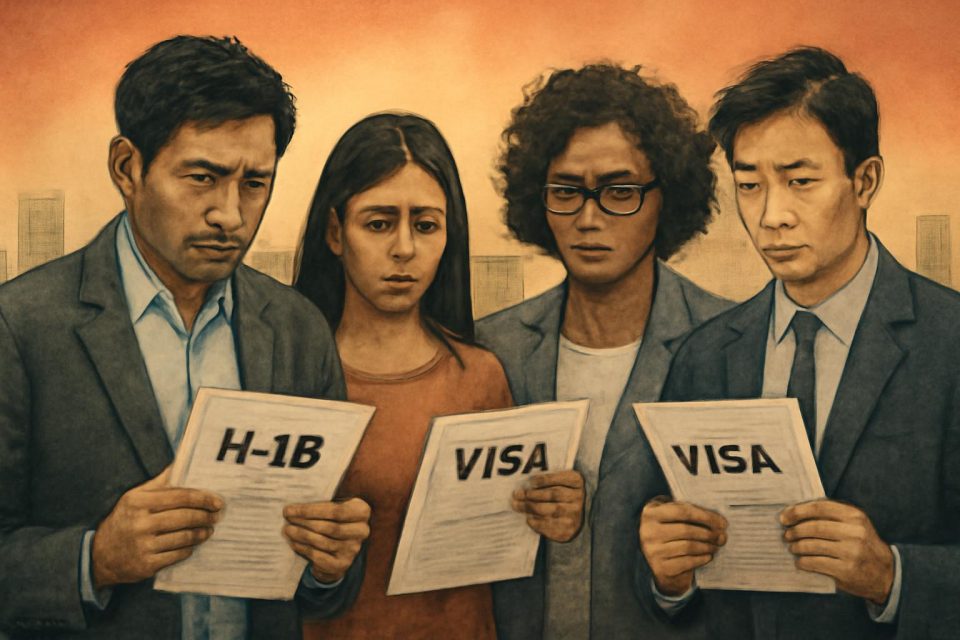
Tech giants such as Amazon, Oracle, Cognizant and Meta have laid off thousands of employees in the past few months, and a large number of the affected people are estimated to be from India on H-1B visas. The visa rules give them 60 days to find new employment, or they must return to their home countries.Listen to this article in summarized format
Tech giants such as Amazon, Oracle, Cognizant and Meta have laid off thousands of employees in the past few months, and a large number of the affected people are estimated to be from India on H-1B visas. The visa rules give them 60 days to find new employment, or they must return to their home countries.
In a market where finding a new job has become extremely tough, they are exploring options to buy time, like shifting to B-2 visas that permit stays up to six months.
B-2 visas are for travelling to the US for pleasure, tourism or medical treatment. The US Citizenship and Immigration Services (USCIS) a year ago archived the rules that allowed B-2 holders to search jobs.
While moving to B-2 is legal, immigration experts said authorities have become increasingly suspicious about the reasons for the extended stay, resulting in a spike in requests for evidence (RFEs), which are notice demanding more documents, and visa denials.
“We are seeing a significant spike in RFEs and Notices of Intent to Deny on B-1/B-2 change-of-status applications filed by laid-off H-1B workers,” said Rajiv Khanna, an immigration attorney based in the US.
Responding to the scale of impact, Khanna said: “The volume we are handling today, unscientifically but clearly, running at roughly 10 times what I would have considered normal at any prior point in my career.”
Three other immigration experts ET spoke with also said they have seen an increase in RFEs and visa denials in recent months.
The scale of tech-led layoffs, and the policy changes under the current Trump administration, including a $100,000 fee for new H-1B petitions, have made the situation tougher for workers.
Layoffs, policy changes
There is no platform that tracks laid-off H-1B workers. According to Layoffs.fyi, which monitors job cuts in the technology and startup industries, more than 110,000 were laid off in 2026 across 144 companies.
Assuming technology companies have roughly 10% immigrant employee population, this could translate to 25,000 H-1B workers over the past year and a half, estimates Boundless Immigration CEO Xiao Wang.
Indians are the largest beneficiaries of the H-1B programme. According to a 2026 report from the USCIS and the Department of Homeland Security, 283,772 of the 406,348 approved H-1B petitions in FY25 were from Indians. They are also among the hardest hit by job cuts at tech firms.
There is a sense of fear, anger and abandonment as many of them have been in the US for close to a decade, and have US born kids with mortgages, Wang said. For them, he said, the policy shifts this year have felt sudden and personal.
“Indian H-1B holders are taking it the hardest because their green card backlogs were already decades long; this is another door closing. We're hearing more people say they want to go home or move to Canada or Europe than at any point in the last decade,” he added.
These employees are under immense pressure, said Kevin J Andrews, an immigration attorney in the US.
Andrews said he has been doing a couple H-1B layoff consultations every week since late 2022, when processing delays had more to do with Covid-19 than ideology and AI wasn't a major disruptive factor in the job market.
Currently, he said many are running the math on whether to move out of the US amid the growing use of AI in surveillance, investigations and even adjudications, he said.
Anna Stepanova, assistant managing attorney at Murthy Law Firm, pointed out that while the primary alternative is securing a new employment within the 60-day grace period, the laid-off employees are pursuing other options including B-2, F-1 student visa, O-1 for individuals with extraordinary ability and L-1 for transfers within the company.
According to Boundless’ Wang, other options include Canada Express Entry or the Global Talent Stream, which can be faster with the possibility of returning to the US a few years down the line.