Synopsis
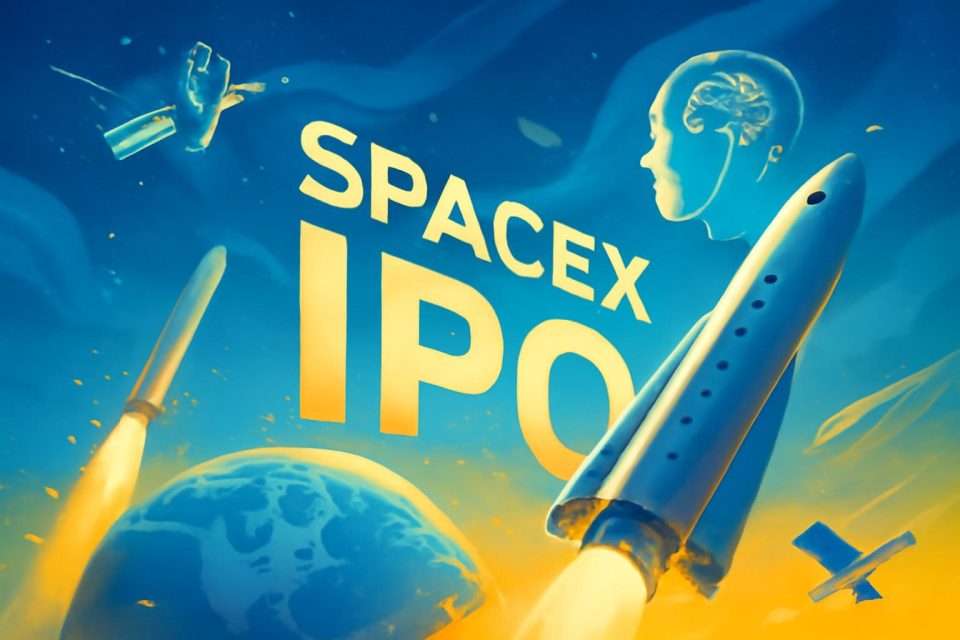
Investors are betting big on SpaceX's IPO, valuing it at nearly two trillion dollars. The company aims to fund its ambitious AI plans with revenue from its Starlink satellite business. Elon Musk's vision relies on the success of the new Starship rocket to cut launch costs. Despite huge losses, many believe SpaceX can achieve its lofty goals.Listen to this article in summarized format
Musk has grown SpaceX into the world's largest rocket business by launching thousands of Starlink internet satellites and pioneering reusable rockets that have transformed the economics of space.
But the company is seeking to be valued not just on those laurels but on the juggernaut it might become if Musk's ambitious bets to colonize Mars, put data centers in space and become a leading AI company pay off.
At the heart of those bets is an assumption that a set of events will unfold in the right order, with each step unlocking the next level of funding and expansion: Starlink will generate the cash to bankroll the next-generation Starship rocket, Starship will slash launch costs to expand the market, and that expanded market will ultimately support the new AI business, currently a money guzzler.
"The risk isn't whether SpaceX is a real business; it clearly is," said Josh Gilbert, analyst at eToro, a trading platform where the stock will be available on the day of debut.
"The risk is whether a $1.75 trillion valuation adequately prices in the execution challenges that come with being part rocket company, part internet provider, part AI venture, and very much driven by the vision of one individual."
SpaceX is testing investor patience with huge losses it disclosed in its initial S-1 IPO filing on Wednesday: $4.28 billion in the three months ended March 31, an eightfold increase from a year earlier.
Those losses alone will force investors to rely less on traditional metrics to value SpaceX, and more on the belief that Musk will execute what he has pledged.
IN MUSK INVESTORS TRUST
From building a trillion-dollar EV company that helped drive a global shift to clean cars to leading SpaceX as the first private firm to fly NASA astronauts, Musk has repeatedly turned high-risk engineering bets into dominant businesses, fueling investor belief that even his most ambitious SpaceX assumptions may prove achievable.
"You are not going to justify a $1.75 trillion or $2 trillion valuation for SpaceX using traditional fundamental metrics alone," Rainmaker Securities cofounder Greg Martin said on a video call. "Many investors ... believe SpaceX could become a $5 trillion to $10 trillion company over time."
Musk's ventures often arrive later than promised: Tesla's Cybertruck, unveiled in 2019, did not begin deliveries until 2023; the Roadster 2, revealed in 2017, has yet to launch, and a more affordable EV platform as well as Optimus robots remain in development. Its Robotaxi rollout, which underpins near-term growth, has been sluggish after lofty promises.
Still, investors, analysts and fund managers - Reuters spoke to 18 of them - are broadly bullish, with many saying the satellite and space businesses alone justify a near-$2 trillion valuation.
RISKS OF THE BUSINESSES
SpaceX would join a small group of companies valued at $2 trillion, most of which have steady revenue and strong profits.
By contrast, SpaceX had an accumulated deficit of $41.31 billion as of March 31, showing the company spent vastly more money in its over two decades of existence than it has earned, reflecting the costs of building reusable rockets, Starlink's huge network, and gigawatt-scale AI data centers.
Starlink remains critical. It generated $3.26 billion in revenue in the March quarter, up nearly a third year-on-year, though margins were pressured by international expansion and other expenses.
SpaceX framed Starship as not just a rocket, saying in the risk factors section of the filing: "Our ability to execute our growth strategy is highly dependent on Starship," warning that delays in development or cost targets could hinder deployment of next-generation satellites and AI infrastructure, driving up costs and undermining growth and customer retention.
It noted that operational rockets Falcon 9 and Falcon Heavy were not capable of deploying its new satellites.
Space revenue plunged 28.4% in the March quarter and losses widened to $662 million from $70 million a year earlier as SpaceX poured money into the development of Starship.
Losses at the AI business ballooned to $2.47 billion and capital expenditures tripled to $7.72 billion, eclipsing the combined capex of the other two businesses.
SpaceX itself put it best: "The complexity and interdependence of our engineering, manufacturing, assembly and terrestrial, space transportation, and infrastructure systems mean that a disruption in one component can have cascading effects throughout our operations."