Incident investigations often suffer from confirmation bias, where engineers form theories based on initial observations and fail to explore further. This can lead to prolonged resolution times as the true root cause remains hidden across various services and signals.
The AWS DevOps Agent addresses this challenge through a multi-agent architecture that breaks down incident operations into specialized capabilities. This design allows for a comprehensive understanding of the system's architecture, enabling the agent to reason effectively about incidents rather than searching blindly through telemetry.
Understanding the Architecture
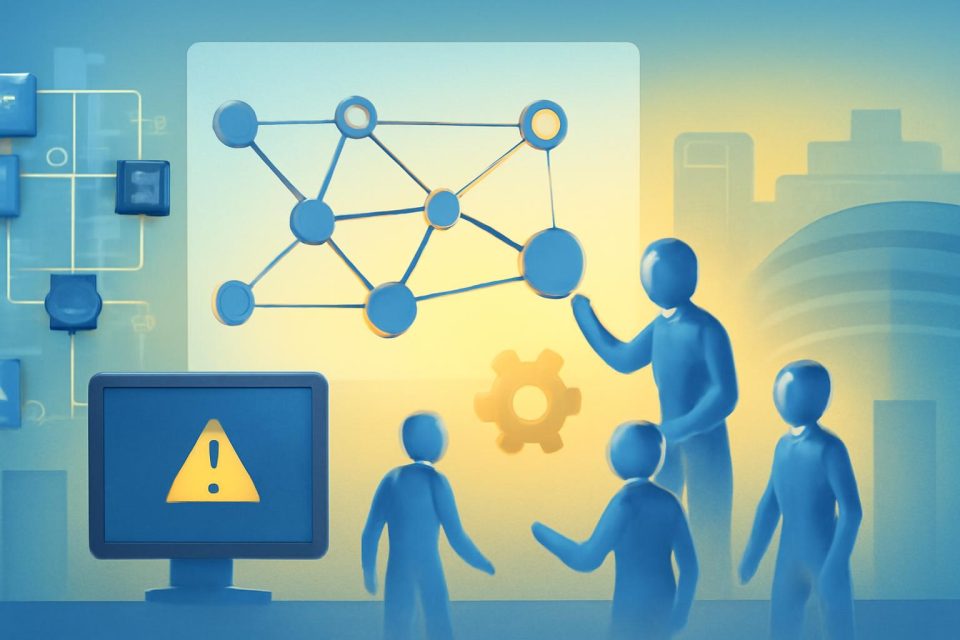
The foundation of the AWS DevOps Agent lies in its topology graph, which provides architectural context throughout the investigation lifecycle. This graph is continuously updated and enriched through various discovery methods, including:
- AWS CloudFormation stack analysis
- Tag-based discovery via AWS Resource Explorer
- Behavioral mapping through CloudWatch Application Signals
- Integration with CI/CD pipelines like GitHub Actions
This learned topology captures both static and dynamic relationships among resources, allowing the agent to trace failures and assess the impact of proposed fixes accurately.
Incident Lifecycle Management
When an incident occurs, the AWS DevOps Agent initiates a triage process that prioritizes speed and correlation. It identifies related alarms, reducing noise and enabling teams to focus on critical issues. This correlation is dynamic, allowing operators to adjust the focus of the investigation as needed.
Deep Investigation
The investigation phase is where the agent's capabilities shine. It mirrors the structured approach of experienced DevOps engineers by:
- Acquiring context about affected resources and recent changes.
- Collecting evidence from various data sources.
- Generating multiple competing hypotheses.
- Validating each hypothesis against supporting and counter-evidence.
This methodical approach helps the agent converge on the root cause only when the evidence strongly supports it, minimizing the risk of oversight.
Mitigation Planning
Once the root cause is identified, the agent generates a structured mitigation plan that includes:
- Remediation strategies
- Step-by-step procedures
- Validation checks
- Rollback procedures
While the agent can recommend actions, it does not execute them, ensuring that human oversight is maintained during critical fixes.
Continuous Improvement
The AWS DevOps Agent also features a prevention capability that analyzes past incidents for patterns, enabling targeted recommendations for improvements in observability, testing, and infrastructure optimization. This proactive approach helps reduce future incidents and enhances overall system resilience.
Conclusion
The AWS DevOps Agent leverages its multi-agent reasoning to transform incident investigations from reactive to proactive, ultimately improving response times and reducing operational burdens on teams. By integrating architectural awareness with structured investigation processes, it supports teams in navigating complex incidents more effectively.