Synopsis
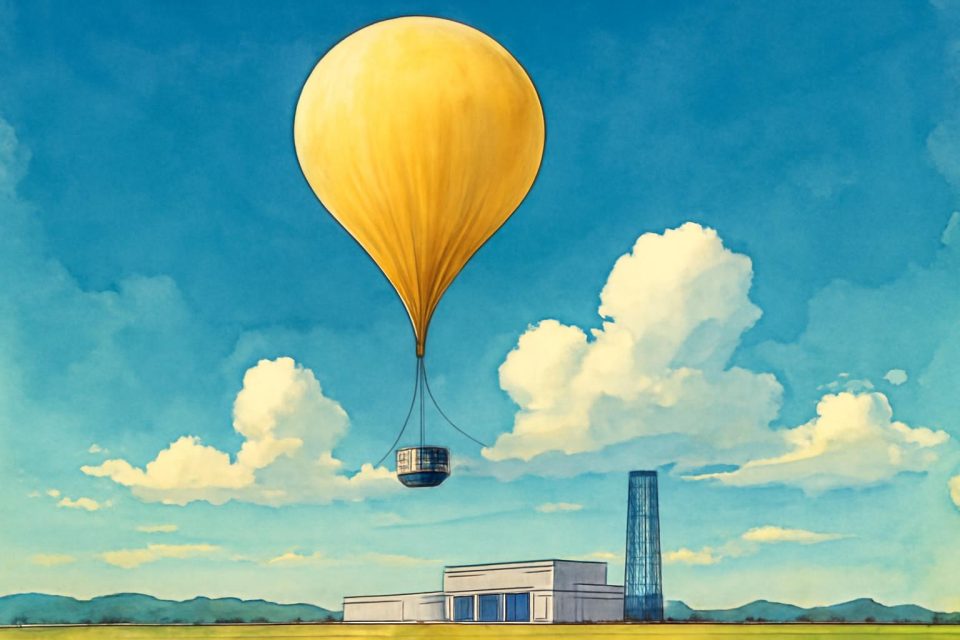
On Wednesday, the company's VISTA platform ascended nearly 25 km above Earth from Vijayawada as part of "Mission SANA", carrying payloads from seven national and international partners, including propulsion technology demonstrations, biological experiment systems, onboard computing platforms and navigation validation systems. The company said all payload missions were completed successfully.Listen to this article in summarized format
On Wednesday, the company’s VISTA platform ascended nearly 25 km above Earth from Vijayawada as part of “Mission SANA”, carrying payloads from seven national and international partners, including propulsion technology demonstrations, biological experiment systems, onboard computing platforms and navigation validation systems. The company said all payload missions were completed successfully.
The launch places India among only five countries, alongside the US, France, Japan and China, with indigenous stratospheric super-pressure balloon capabilities.
Sireesh Pallikonda, cofounder and COO of Red Balloon Aerospace, said the company has built 75-80% of the value chain in-house, including balloon design, material development, fabrication and load-bearing systems, while importing some raw materials, polymers and navigation chips.
Founded in 2025 by former Skyroot Aerospace executives Sireesh Pallikonda and Dr CVS Kiran, Red Balloon Aerospace said it achieved operational commercial flight within eight months of inception, which it claims is among the fastest development timelines globally in the near-space sector.
Red Balloon targets the stratosphere, the layer between aircraft flying below 10 km and satellites orbiting above 160 km, as a new commercial infrastructure zone. Pallikonda said such systems combine some advantages of satellites and drones while being cheaper than orbital missions, and can offer high-resolution imaging, longer monitoring times and faster deployment.
Unlike conventional zero-pressure balloons that stay airborne for only a few hours or days, super-pressure balloons can maintain stable altitude for much longer durations. While the current mission is expected to stay airborne for over nine hours, the company said its long-term target is to achieve weeks- or months-long endurance.
Among the customers whose payloads flew on Wednesday's launch were Radhranix, EndureAir and South African company Miura Space.
Red Balloon Aerospace is building its business around two models: rideshare launches carrying multiple customer payloads and dedicated launches for individual customers.
“A single VISTA mission can support multiple customers, multiple experiments and multiple industries at the same time,” Pallikonda said. “Customers don’t need to worry about communications, power systems or regulatory approvals.”
The company plans to conduct 12 rideshare launches annually along with four to five dedicated launches. “Of these, eight launches are already commercially booked to a certain extent,” Pallikonda said.
Its next big bet is on high-altitude platforms for rural connectivity and disaster communications through non-terrestrial networks (NTN). For this, the company is developing HELIX airships designed to operate at around 20 km altitude as “towers in the sky” covering a radius of nearly 500 km.
The company hopes to complete the initial HELIX platform by December this year, with flight trials beginning early 2027. Pallikonda claimed such systems could reduce rural and hilly terrain connectivity costs by nearly 75% compared with laying fibre networks.
Red Balloon Aerospace, which has so far raised a pre-seed round, is preparing to raise more capital as it develops larger airship systems. Globally, the company says it benchmarks itself against near-space companies such as Sceye and World View.
Globally, Alphabet’s Project Loon had earlier attempted similar high-altitude connectivity systems but struggled commercially. Pallikonda said Red Balloon Aerospace is taking a different approach focused initially on payload hosting and near-space services rather than global internet constellations.