Synopsis
Indian space startup Skyroot Aerospace projects significant revenue growth, aiming for over Rs 13,000 crore by FY32, driven by launch services and satellite systems. Ahead of its maiden orbital launch, the company's space systems division is already generating revenue, with launch services poised to become the primary growth engine.Listen to this article in summarized format
The Hyderabad-based startup founded by two former ISRO scientists — Pawan Kumar Chandana and Naga Bharath Daka — has forecast revenues of Rs 977 crore in FY27, rising to Rs 2,039 crore in FY28 and Rs 13,205 crore by FY32, driven by launch services, and satellite systems manufacturing.
Per the report, the startup plans to grow its headcount from 1,163 employees to 5,749 by FY32. That would make it among the largest private employers in India’s emerging commercial space sector.
In an interview with ET after hitting unicorn status, Chandana had said that global demand is expected to be a major revenue driver as most of its conversations are with US, Europe, and southeast Asian customers. The two primary segments driving launch vehicle demand are earth observation and communications.
The projections come some weeks after Skyroot raised $60 million at a post-money valuation of $1.16 billion. The funding round was led by Sherpalo Ventures and GIC, with participation from BlackRock and existing investors.
While Skyroot remains pre-revenue in its core launch business, its space systems division, which manufactures satellite structures, payload adaptors, propulsion systems, composite motor cases, actuators, nozzles, etc., has started generating cash. It clocked revenues of Rs 100.6 crore in FY26, its first year of monetisation, and has an order book worth Rs 605.4 crore scheduled for execution over the next 18 months.
According to the report, space systems are expected to comprise about 21% of the firm’s revenues by FY32, while launch services will emerge as the company's primary growth engine.
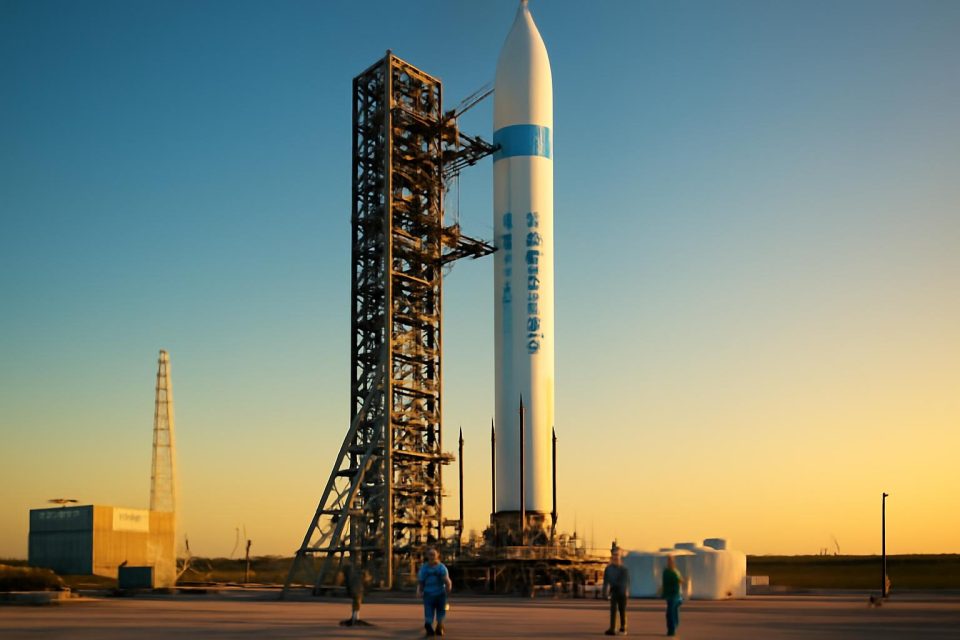
Preparing for the maiden launch of Vikram-1, India's first privately developed orbital rocket, Skyroot has already shipped key hardware to Sriharikota and is targeting a launch window in the coming weeks, pending final clearances from ISRO and IN-SPACe, as reported by ET. The mission will carry a mix of domestic and international payloads.
First flight
Vikram-1 is designed to place small satellites in orbit through dedicated missions, a business that Chandana, who’s also the CEO, called a "space taxi" model for customers seeking customised launches.
“Even with the launch production capacity we are planning, we may not be able to fully meet the demand right now,” Chandana had said, and added, “We will be conducting initial launches and demonstrating the capability to reach orbit consistently. Once that happens, the contract book is expected to build up strongly.”
The KPMG report says Skyroot would be Ebitda positive in FY29, at Rs 285 crore, compared with a loss of Rs 130.3 crore in FY26, reflecting the capital-intensive nature of launch vehicle development. Ebitda is projected to expand to Rs 6,743 crore by FY32.
In its analysis, KPMG benchmarked Skyroot against global spacetech firms Rocket Lab and Firefly Aerospace, while noting the absence of listed Indian peers in the launch vehicle segment. The report said Skyroot was valued at a discount to these companies due to its pre-operational status, lack of commercial launch history, and ongoing development of reusable launch vehicle technology.
In 2025, Rocket Lab conducted 21 launches. Firefly did one launch but failed to reach orbit due to an issue during stage separation. Currently the company is conducting advanced tests for future missions.