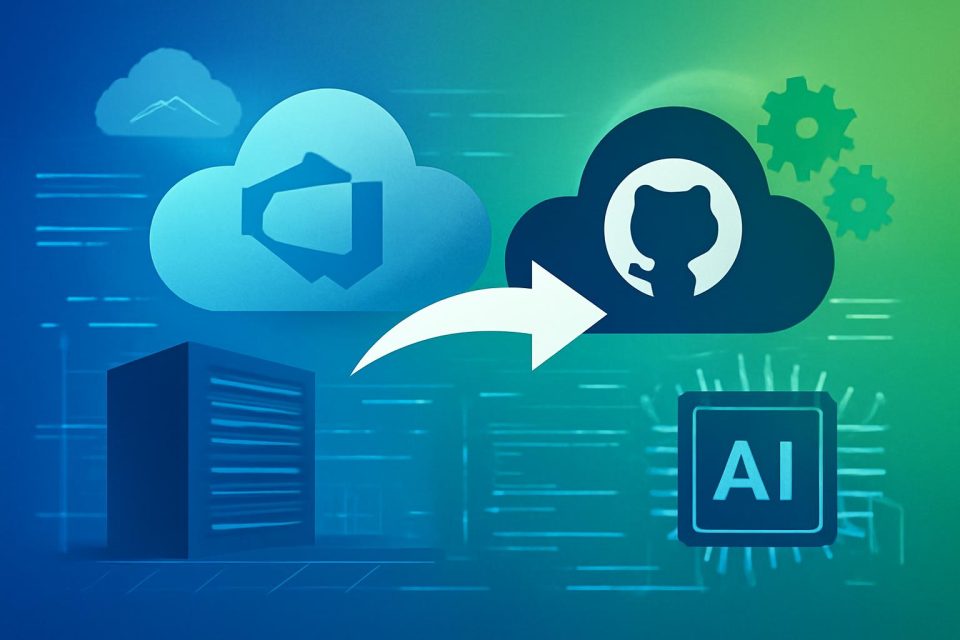
Microsoft is undertaking a significant migration of its repositories from Azure DevOps to GitHub, aiming to leverage advanced AI capabilities and streamline software development processes. This move reflects a broader trend where the location of code repositories is becoming a strategic decision for organizations looking to maximize value.
The integration between Azure DevOps and GitHub has been a focus for product teams, who have developed tools such as the GitHub Enterprise Importer (GEI) and Enterprise Live Migrator (ELM) to facilitate this transition. These tools enhance the migration process while allowing teams to continue using Azure Boards and Azure Pipelines for essential workflows.
Migration Insights from CAP
The Copilot, Agents, and Platforms (CAP) organization provides valuable insights into the migration process at Microsoft. CAP manages around 4,000 active repositories and has successfully migrated over 80% of its targeted repositories to GitHub within six months, involving more than 3,100 developers.
Despite some complex repositories remaining on Azure DevOps, CAP anticipates that tools like ELM will expedite future migrations, including more intricate mono repositories. This suggests that large-scale migrations can be achieved without halting ongoing development.
Benefits of Migration
By transitioning to GitHub, CAP engineers gain quicker access to innovative AI features such as GitHub Copilot and enhanced code review tools. These capabilities are integrated directly into daily development workflows, allowing for a more cohesive experience.
Furthermore, the migration simplifies code discovery by consolidating work into a single GitHub organization, reducing fragmentation that arose from multiple Azure DevOps organizations. Developers can remain productive across various platforms, whether on mobile, desktop, or through the command line interface.
Maintaining Hybrid Workflows
CAP's approach emphasizes the importance of maintaining existing workflows. Azure Boards and Azure Pipelines continue to play a critical role in planning and continuous integration/continuous deployment (CI/CD) processes. The Azure Pipelines GitHub app facilitates the connection between existing pipelines and migrated repositories.
Challenges and Adjustments
While migrating to GitHub offers numerous advantages, it also requires adjustments for teams transitioning from Azure DevOps. Developers may need to adapt to a new workflow that emphasizes APIs and integrations over UI customizations. CAP has leveraged the expertise of developers with prior GitHub experience to ease this transition.
Key Takeaways
The migration experience within CAP illustrates that moving to GitHub can be done incrementally and at scale. Other teams within Microsoft are also pursuing similar paths, highlighting a collective shift towards GitHub for enhanced AI-powered software development.
As organizations consider their migration strategies, the lessons learned from Microsoft's experience can inform their decisions, ensuring a smoother transition while retaining essential DevOps workflows.