Synopsis
Trump has embraced government investment in private companies in his second term, scrambling his party's politics. His administration last year secured a 10 per cent stake in the struggling Silicon Valley company Intel, and it considered a government takeover of Spirit Airlines earlier this year, although the airline couldn't reach a deal and ultimately closed.Listen to this article in summarized format
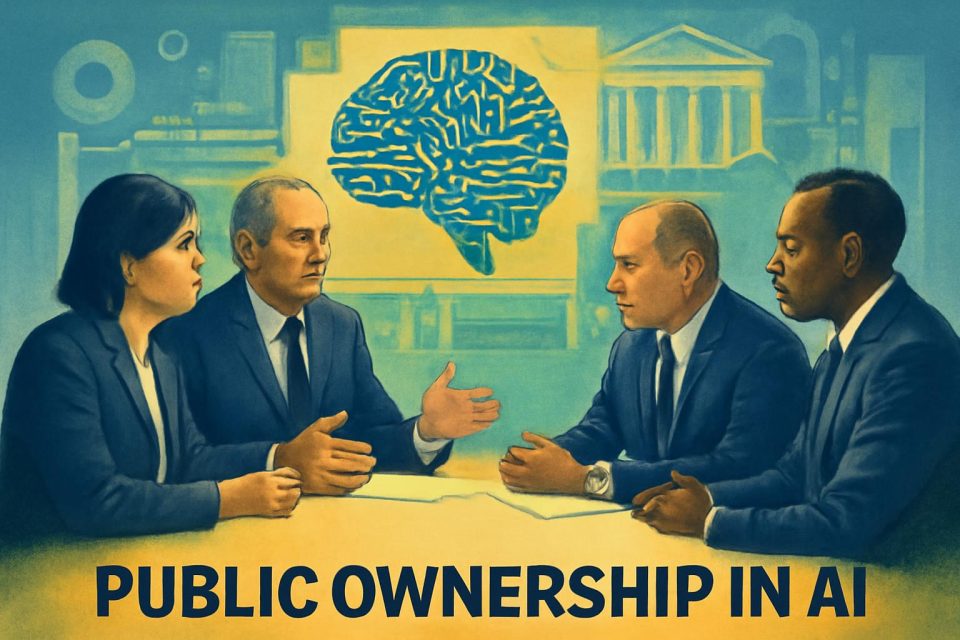
The meeting between the two had come just after the Vermont senator announced a plan for the public to take a 50 per cent ownership stake in artificial intelligence companies such as OpenAI, using their stock to create a public wealth fund that would spread the fortune generated by AI behemoths.
Altman told Sanders that he, too, wants the public to have equity in AI companies. Though the CEO said he couldn't support Sanders' threshold of 50 per cent, he nonetheless wanted to work with him to advocate for the general idea, according to people with knowledge of the conversation.
The nearly hourlong meeting in Sanders' Senate office this week, held at Altman's request, highlighted the inherent tension between AI powerhouses and policymakers as Americans are increasingly asked to accept the costs of the AI boom even as they remain unconvinced of its direct benefits. Yet it's also creating odd political bedfellows fuelled by populism as politicians from Sanders to President Donald Trump embrace giving the public a stake in AI's growth.
Speaking to reporters on Air Force One on Friday, Trump described a potential partnership "where the American people can benefit from the success of AI" and said executives from leading AI companies will visit the White House, "probably next week," to discuss the idea.
"There's something very interesting about it, where it almost becomes a partnership with the American public," Trump, a Republican, said Friday.
When reporters noted to Trump that Sanders, a self-proclaimed democratic socialist, had proposed public ownership in AI companies, he pointed to similarities in their coalitions. The economic views of Trump voters and voters who supported Sanders for president, Trump said, "aren't that far apart."
Trump has embraced government investment in private companies in his second term, scrambling his party's politics. His administration last year secured a 10 per cent stake in the struggling Silicon Valley company Intel, and it considered a government takeover of Spirit Airlines earlier this year, although the airline couldn't reach a deal and ultimately closed.
Public backlash is becoming harder to ignore
The positioning of leading figures such as Trump and Sanders comes as concerns about AI are emerging far beyond Washington.
In Michigan, Democrats recently clashed over Gov. Gretchen Whitmer's appearance with Altman at the site of a major data center. Candidates such as New York Democratic House hopeful Alex Bores have also made AI regulation a campaign issue by tapping into voters' angst about the technology.
"This is a real change to society," Altman told reporters this week. "I think it's possible both that people can use AI a lot and like using it and also have anxiety about what it's going to do for the future."
Data center projects across the country have drawn opposition from residents concerned about electricity demand, water consumption and environmental impacts. Some states once eager to attract the facilities, including Ohio and Virginia, have moved to reconsider tax incentives.
"We need to pass legislation right now that says there's not going to be any further data center development until they agree to pay for their own electricity, build their own grids and pay for their own water supply," Missouri Sen. Josh Hawley, a leading Republican skeptic of Big Tech, told The Associated Press.
Before arriving in Washington, Altman stopped in Michigan on Monday to appear alongside Whitmer, a Democrat, at the building site of a 1.65 million-square-foot data center. Whitmer's team claimed the project will create more than 2,500 union construction jobs.
But it also drew criticism from local activists and some Democrats, including Michigan Rep. Rashida Tlaib, who called the project "disgusting." She said she was "so disappointed" in Whitmer.
"It's a very controversial topic right now and it's coming from the ground up," Michigan Sen. Elissa Slotkin, a Democrat, said about the grassroots pushback. "People feel very strongly about it."
Whitmer, however, told reporters after the event that "one thing's very clear, everyone has a cellphone in our pocket."
"We are all, more and more, consuming technology and data and these data centers are going to get built. So, my thought is if we can hold them to a high standard and do it in Michigan, that's the best way to do it," she said.
The tensions extend beyond data centers. On college campuses, commencement speakers have been interrupted by boos when discussing artificial intelligence. About 70 per cent of college students see AI as a threat to their job prospects, according to a 2025 poll by the Institute of Politics at the Harvard Kennedy School.
Altman acknowledged those concerns. He said that while "the impact on jobs has been less than many people in our field expected," he understands "that college students have a lot of anxiety about the future."
Washington searches for an AI bargain
The idea that AI's expansion is inevitable is increasingly shared by leaders across the political spectrum, even as they disagree sharply about how to manage it.
That reality was at the centre of Altman's conversations in Washington. In addition to Sanders, Altman met with Trump administration officials such as Michael Kratsios, the White House's chief science and technology adviser, and congressional leaders from both parties.
Sanders' team emphasized that the two did not reach an agreement on the main points that the senator made to Altman, including the 50 per cent figure so the public has decision-making power. Sanders also expressed opposition to the growing election spending by the AI industry.
"Unfortunately, Sam Altman did not commit to any of those," said Sanders' spokesperson Jeremy Slevin.
Altman, in emerging from the conversation, described it as "great," adding that the two "obviously don't agree on everything."
Policy makers are also looking at how AI should be governed
Congress this week released a bipartisan framework that would establish the first broad federal approach to AI regulation while temporarily preempting many state laws.
Anthropic, one of OpenAI's top competitors, has proposed mechanisms for coordinating pauses on advanced AI development if systems become too powerful.
The Trump administration has also begun constructing its own oversight structure, signing an executive order to establish a process for reviewing national security risks posed by advanced AI systems before their public release.
Sanders said he found the administration's move notable after years of warnings that regulation could slow American innovation.
"Even these guys are beginning to catch on that there are legitimate concerns that have to be dealt with," Sanders said.