Synopsis
During two investor presentations ahead of the IPO, both featuring President Gwynne Shotwell and Chief Financial Officer Bret Johnsen, SpaceX executives outlined a roadmap to begin demonstrating orbital-compute capabilities in 2027, according to the two people familiar with the discussions. Both sources were at a Goldman Sachs meeting and one attended another meeting as well.Listen to this article in summarized format
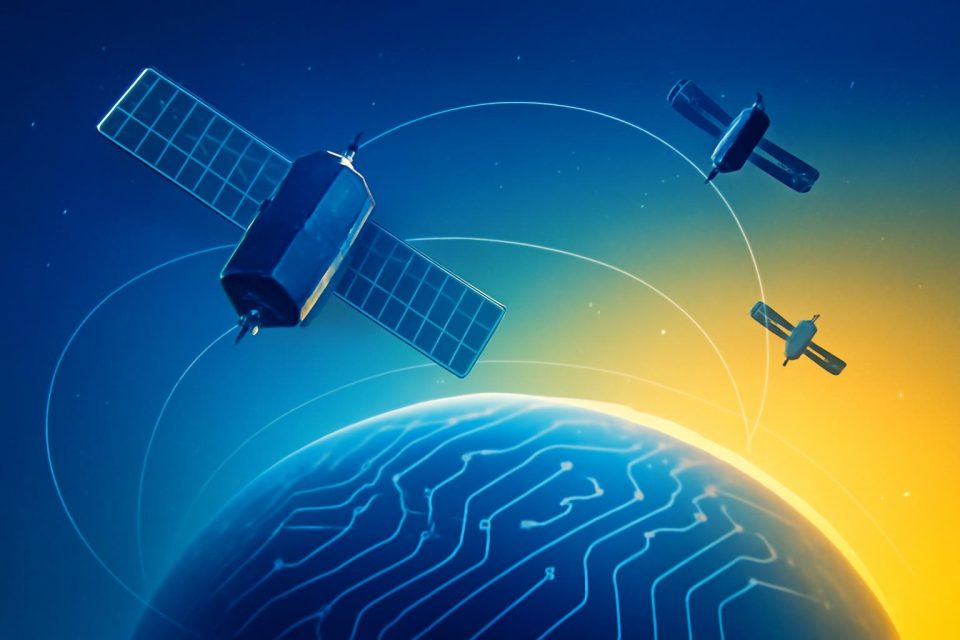
SpaceX has requested permission from regulators to launch up to 1 million space-based data-center satellites.
During two investor presentations ahead of the IPO, both featuring President Gwynne Shotwell and Chief Financial Officer Bret Johnsen, SpaceX executives outlined a roadmap to begin demonstrating orbital-compute capabilities in 2027, according to the two people familiar with the discussions. Both sources were at a Goldman Sachs meeting and one attended another meeting as well.
While the IPO filing said orbital data-center deployments could begin as early as 2028, it did not distinguish between demonstration missions and commercial deployments.
Shotwell and Johnsen, who have been meeting with major investment banks to pitch a $75 billion fundraise in the company's IPO targeting a valuation of $1.75 trillion, described the initial deployments as demonstrator systems intended to validate the technology before any broader commercial rollout, the sources said.
One of them interpreted the timeline in the IPO filing as providing management room for potential delays in Starship development or satellite manufacturing.
SpaceX did not immediately respond to a request for comment on the event attended by several investors and portfolio managers. SpaceX stock is scheduled to begin trading on the Nasdaq on Friday under the ticker symbol SPCX, with the IPO price targeted at $135 per share.
Starship delays pose challenge
Starship, the fully reusable rocket that underpins the company's plans for orbital computing, remains years behind SpaceX CEO Elon Musk's original targets and has yet to demonstrate the rapid reusability needed to make large-scale deployment economically viable.
Musk has encountered delays with projects at many companies he runs, but many involve open-ended challenges that were particularly difficult to solve, said Michael Monaghan, partner and portfolio manager at Founder ETFs, who was not at the meetings.
"I think that orbital data centers, while a difficult problem, have some bounds on it, which to me gives greater confidence that the timelines laid out will be hit." In a video released on Monday, Musk said that building orbital AI data centers is not a difficult engineering challenge because much of the required technology already exists in its current Starlink satellite network.
The first version of the AI satellite is likely to use Nvidia chips and the spacecraft's computer power would be equivalent to that of an Nvidia GB300 rack, the CEO said.