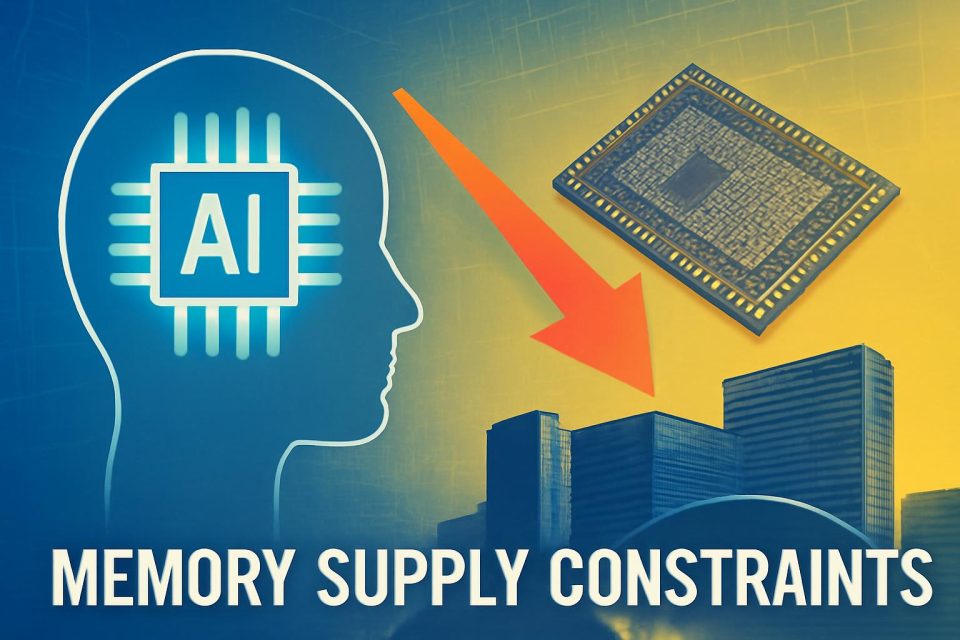
The memory storage sector is anticipated to encounter ongoing supply constraints until 2027, primarily due to escalating demand from artificial intelligence applications. This trend is expected to significantly affect the availability of Dynamic Random-Access Memory (DRAM), High Bandwidth Memory (HBM), and enterprise Solid-State Drives (SSDs).
Market Dynamics: According to Morgan Stanley, the memory supply landscape will be dominated by allocation-based supply chains rather than traditional spot pricing. This shift will likely result in non-AI buyers facing tighter supply, increased costs, and limited access to memory resources.
Despite a projected 30% increase in total DRAM wafer capacity by 2027, the supply available for consumer electronics such as smartphones and PCs is expected to fall short by 12-15%. Suppliers are prioritizing high-margin HBM and server memory, further constraining availability for other markets.
Impact of Policy Responses: While potential policy measures, including subsidies and tax reforms in the US and China, could alleviate some pressure, the long-term nature of supply chain responses means that immediate relief is unlikely. The current situation suggests a fundamental reset in supply-demand dynamics, diverging from typical semiconductor cycles.
Memory prices have surged six-fold in the past year due to heightened AI demand. Major cloud service providers and AI-focused businesses are securing memory capacity through long-term contracts, which is reshaping market pricing and leaving traditional OEMs with reduced and more volatile supply.
Understanding Chipflation: Morgan Stanley has termed this phenomenon "Chipflation," indicating a shift from historical price declines in microelectronics to sustained increases. This inflation is not merely a component-price issue; it reflects broader market changes driven by AI infrastructure needs.
Consequences for Hardware Manufacturers: The divide between memory chip manufacturers and hardware companies is widening. While memory producers enjoy improved pricing and margins, OEMs and cloud buyers outside the AI sector must contend with rising costs, which may lead to higher consumer prices, delayed product launches, and potential demand destruction in sensitive markets.
Broader Economic Implications: The ramifications of these supply issues extend beyond consumer prices. Although the impact on consumer inflation may appear modest, significant pressure is evident in producer price indices, corporate margins, and capital expenditure budgets. Insufficient chip supply could hinder data center projects and overall productivity growth.
As the demand for memory continues to be driven by AI infrastructure expansion, the current cycle is shaping up to be more extensive than previous semiconductor upswings.