Synopsis
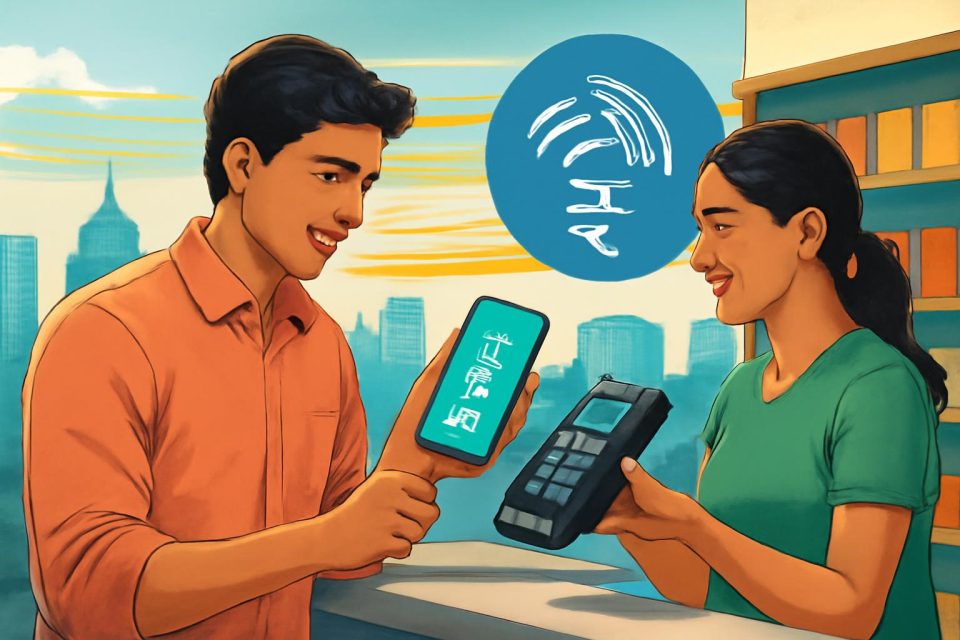
Indian shoppers are increasingly opting for contactless 'tap-and-pay' card transactions, with estimates suggesting they now account for up to a third of total card swipes. This trend is driven by younger consumers and a preference for speed, as contactless payment infrastructure expands across the country.Listen to this article in summarized format
While the Reserve Bank of India does not give segregated data on the share of contactless payments out of the total card transactions at offline merchant stores, industry estimates suggest around a 40% jump per year in contactless card payment over the last two years, industry insiders told ET.
“We see a strong shift towards contactless ‘tap-and-pay’ card transactions across India,” said Ramakrishnan Gopalan, head of products and solutions, India and South Asia, at Visa. “While we do not comment on specific transaction data, our observations are directionally aligned with industry trends of rise in contactless tap-to-pay usage at POS terminals.”
The spike in contactless payments comes at a time when fewer people are paying via their cards or physical cash amid an overwhelming shift to UPI transactions.
According to RBI data, debit card usage is shrinking consistently, dropping to 72 million transactions at offline stores in April from 87 million in April 2025. During the same period, credit card transactions rose to 275 million from 228 million.
Here also, consumers are rapidly moving away from chip-and-pin to tap-and-pay, led by the Gen Z digital-first generation.
Industry data suggests that the share of contactless payments made by cards rose to around 16% in 2021 from just around 2.5% in 2018.
Senior payment industry executives said the trend is driven by increasing consumer preference for speed, especially at high-frequency retail environments, and the expansion of the contactless-enabled acceptance infrastructure in the country.
“Our users are young and digital-first; for them, tapping is just the default way to pay,” said Anil Goteti, founder of new-age cobranded credit card distributor Scapia. “We expect this to only go up from here.”
Tap-and-pay accounts for 30% of Scapia’s total point-of-sale (PoS) transaction volume, Goteti said.
Ketan Patel, chief executive of Mumbai-based payment company MSwipe, said the platform has recorded a 40% on-year jump in tap and pay payments in face-to-face transactions at offline stores. “Our overall share of contactless transactions are hovering around 12-15% in terms of number of transactions,” he added.
Currently, the RBI allows pin-less contactless transactions via cards only up to Rs 5,000. Once that limit is increased even slightly, industry insiders believe the entire card payment behaviour will change as improved security and monitoring systems have minimised misuse risks.
Card processors are now preparing for a future where payment terminals could look different.
With more premium consumers becoming comfortable with tap payments and Apple Pay set to launch in India, this segment might move out of the chip payment habit altogether, chief executive of a Pune-based payments company told ET.
“Large, organised retail merchants who invest in multiple terminals currently might opt for only a few chip terminals, instead deploying more tap-only terminals which are cheaper in price,” the executive said.
A broader shift towards making payments via smartphones through QR codes for UPI and through near-field communication techniques with smartphones will be the future of payments, people cited above said.
Under the NFC mechanism, consumers can save their cards in tokenised formats in their smartphones and use the NFC feature in their phones to tap and pay.
Visa has enabled contactless-led engagement in almost 5,000 outlets nationwide, across brands such as Shoppers Stop, Lifestyle, Lulu, More Retail, Star Bazaar and Max Fashion. “Targeted ecosystem-led interventions at the point of sale are helping drive awareness and usage,” Gopalan said.