Synopsis
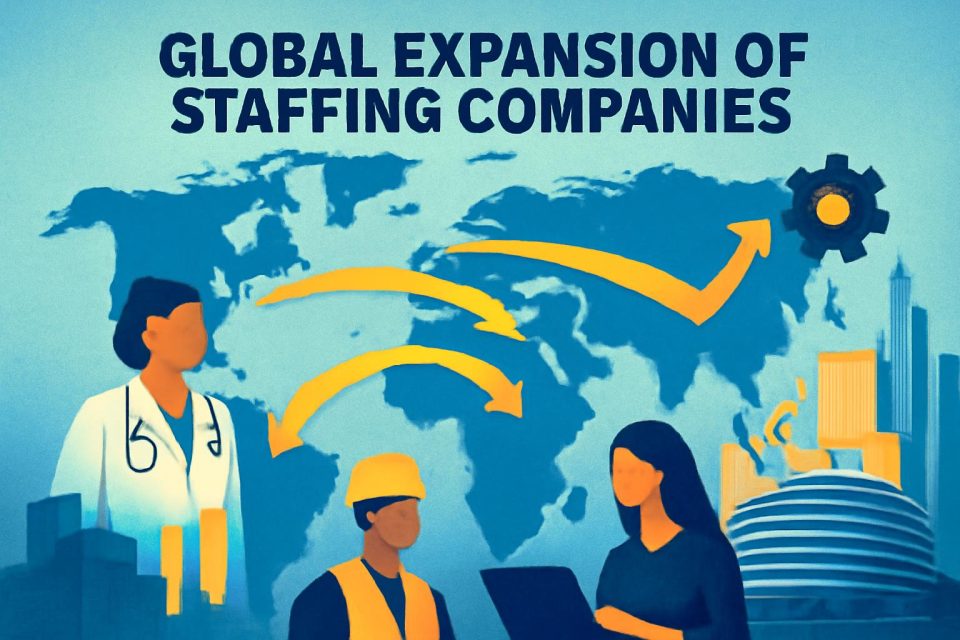
Indian staffing companies are actively expanding their global reach. They are tapping into international talent shortages across sectors like healthcare, engineering, and technology. This strategic move aims to diversify revenue and enhance profit margins. Firms are focusing on regions like Southeast Asia, the US, and Europe. This expansion is driven by client demand and the growth of global capability centers.Listen to this article in summarized format
The opportunity spans far beyond technology roles, though artificial intelligence (AI) and cybersecurity continue to figure prominently on the list, according to industry experts.
Demand is accelerating for workers across healthcare, engineering, logistics, manufacturing, construction and hospitality as companies worldwide struggle to fill talent gaps. At the same time, growing workforce mobility and the rapid expansion of global capability centres (GCCs) are making cross-border recruitment easier and more scalable.
To tap into this trend, firms are looking at expanding in regions such as Southeast Asia, West Asia, the US and Europe, betting that international business will not only diversify revenue streams but also deliver stronger margins through higher-value workforce solutions.
Executives say the push is also being driven by existing clients seeking multi-country hiring support as well as companies expanding into new markets. Banking, financial services and insurance (BFSI), technology, infrastructure, healthcare and logistics, energy, construction and hospitality remain the main demand drivers, according to TeamLease Digital, Quess, Randstad and Adecco.
“The mix is almost 50:50 on mandates coming in from our global existing clients and local in-market companies, particularly in the BFSI, technology, healthcare and engineering domains,” said Neeti Sharma, CEO, TeamLease Digital. “Many of our enterprise customers have talent requirements in other geographies. Secondly, with remote and global mobility on the rise, it becomes easier to match talent needs.”
TeamLease currently operates in Singapore and the UAE, but is tracking markets such as Japan, Australia and New Zealand, South Korea, the UK and the US closely, where GCC-style capability centre build-outs are accelerating.
Demand-led international expansion
According to Yeshab Giri, chief commercial officer, operational talent solutions, at talent company Randstad India, about 90% of the global labour gap is being driven by around 20 countries. The US and the UK are expected to account for about 40% of the demand by 2030, alongside steadily growing demand corridors such as Eastern Europe, Russia, Japan, South Korea and Germany.
“India has become a core delivery hub for global employers,” said Giri.
At Randstad, sectors driving global talent demand include healthcare, assembly lines, shop floor roles, logistics and retail, food processing, construction and hospitality. Additionally, IT and digital engineering, BFSI and manufacturing are also generating robust demand.
“The clear shift is from volume general staffing toward high-skill professional and digital roles,” said Giri.
For Quess, the international business accounts for about 20% of the profits. West Asia contributes about 40% of the international business, followed by Singapore (30%), with the remainder coming from other markets.
While geopolitical uncertainties have affected new sales to some extent, the outlook is promising, said Lohit Bhatia, group CEO, Quess Corp.
“Mobility of skilled manpower is something that we want to look at very seriously in the coming years. We are talking to many partners across the globe, where skilled talent in certain specific areas is required by them,” added Bhatia.
Construction and MEP (mechanical, electrical and plumbing) , healthcare and aged care, technology, hospitality and related sectors are seeing the strongest traction, he said.
Firms expect the share of international business in their overall revenues to increase steadily in the coming years as clients adopt more globally distributed talent models.
“International business is a strategic growth priority for us,” said Peush Saproo, head of sales, permanent recruitment, Adecco India, which expects the contribution of international business to increase to 20-30% of overall revenue in the next two-three years from about 10-15% at present.
“Growth will be driven by deeper engagement with multinational clients, rising GCC-related hiring demand, and expansion of our professional staffing and workforce solutions portfolio,” he added.