Synopsis
Despite US approval for around 10 Chinese firms to buy Nvidia's H200 AI chips, no deliveries have occurred. CEO Jensen Huang's China trip, facilitated by President Trump, aims to resolve this deadlock, highlighting the complex US-China tech rivalry impacting even approved trade.Listen to this article in summarized format
Huang, who was not initially listed in a White House delegation to Beijing, joined the trip after an invitation from President Donald Trump, a source said. Trump picked him up in Alaska en route to a summit with Chinese President Xi Jinping, raising hopes the trip could finally unlock stalled efforts to sell the H200 chips in China.
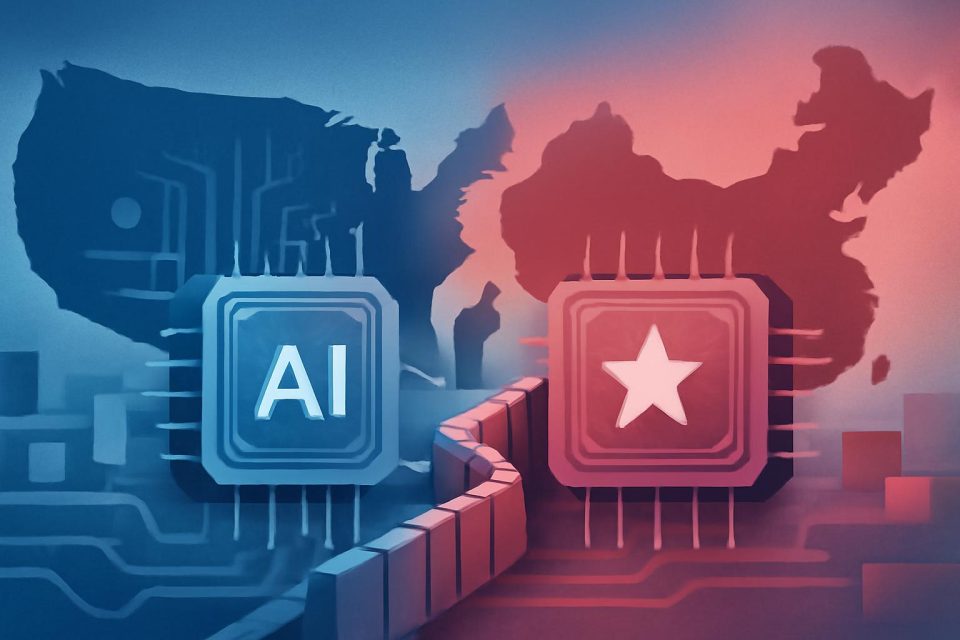
The stakes are significant, highlighting how the U.S.-China tech rivalry is now snarling even approved trade, leaving the world's most valuable company and dominant chipmaker caught between duelling national priorities.
Before U.S. export curbs tightened, Nvidia commanded about 95% of China's advanced chip market. China once accounted for 13% of its revenue, and Huang has previously estimated the country's AI market alone would be worth $50 billion this year.
The U.S. Commerce Department has approved around 10 Chinese companies, including Alibaba, Tencent, ByteDance and JD.com to purchase Nvidia's H200 chips, according to the sources, who spoke on condition of anonymity due to the sensitivity of the matter.
A handful of distributors, including Lenovo and Foxconn, have also been approved, they said. Buyers are permitted to purchase either directly from Nvidia or through those intermediaries and each approved customer can purchase up to 75,000 chips under the U.S. licensing terms, two of them said.
The identities of the approved buyers, and the nature of their relationships with Nvidia and the authorized distributors involving the coveted AI chip, have not been previously reported.
A spokeswoman for the US Department of Commerce, which oversees export controls like those on H200 semiconductors, declined comment.
China's Ministry of Industry and Information Technology and the National Development and Reform Commission did not respond to requests for comment.
Lenovo confirmed in a statement to Reuters that the company "is one of several companies approved to sell H200 in China as part of Nvidia's export license."
Nvidia, Alibaba, Tencent, ByteDance, JD.com and Foxconn did not respond to requests for comment.
Huang told state broadcaster CCTV on Thursday that he hoped Trump and Xi would build on their good relationship during talks in Beijing to improve two-way ties.
No sales yet
Despite U.S. approval, deals have stalled, as Chinese firms pulled back after guidance from Beijing, one source said.
The shift in China was partly triggered by changes on the U.S. side, though exactly what changed remains unclear, the person added.
In Beijing, pressure is mounting to block or tightly vet the orders, a separate fourth source said.
Commerce Secretary Howard Lutnick echoed that view, telling a Senate hearing last month that "the Chinese central government has not let them, as of yet, buy the chips, because they're trying to keep their investment focused on their own domestic industry."
Beijing's hesitation reflects a strategic calculation, as it fears imports could weaken a push to develop homegrown AI chips. While China's AI chips still lag Nvidia, firms like DeepSeek increasingly tout their reliance on domestic chips including those developed by Huawei.
Their pivot to Huawei underscores Nvidia's precarious position in China. Huang has warned that U.S. export controls are eroding the company's foothold in the market, saying its share of AI accelerators in China has effectively fallen to zero.
Thorny conditions
The path to a completed sale has been obstructed by a tangle of requirements on both sides. U.S. rules issued in January require Chinese buyers to demonstrate they had installed "sufficient security procedures" and would not use the chips for military purposes.
Nvidia must also certify sufficient inventory in the United States.
Trump negotiated an arrangement under which the U.S. would receive 25% of the revenue from the chip sales - a structure that requires the chips to pass through U.S. territory before being shipped to China, as U.S. law does not permit the direct imposition of export fees.
The arrangement has prompted unease in Beijing over potential tampering or hidden vulnerabilities, even as sources describe it primarily as a workaround to legal constraints.
Scrutiny in China has also intensified after the State Council issued two recent supply chain security regulations, prompting a government-wide effort to identify and eliminate potential foreign dependencies in critical technology infrastructure, the fourth source said.
The continued delay has been welcomed by China hardliners in Washington, who dismiss Trump administration claims that such sales would deter Chinese rivals from closing the gap with U.S. chip designers.
"Any deal that allows Nvidia to sell more chips to China means fewer Nvidia chips for U.S. firms, and a smaller U.S. lead in AI over China," said Chris McGuire, senior fellow for China and emerging technologies at the Council on Foreign Relations.
"It is remarkable that President Trump keeps getting convinced to put Nvidia's interest ahead of America's."