Synopsis
Samsung's labor union remains committed to a strike despite the company's offer of unconditional pay talks, leading to a significant drop in shares. Negotiations over pay and bonuses have collapsed, with the union planning an 18-day walkout from May 21. Analysts warn of production disruptions and delivery reliability concerns, while the government urges dialogue to avoid economic risks.Listen to this article in summarized format
Government-mediated negotiations between the union and the company over pay and bonus schemes collapsed this week, heightening concerns about a strike at the world's biggest memory chipmaker.
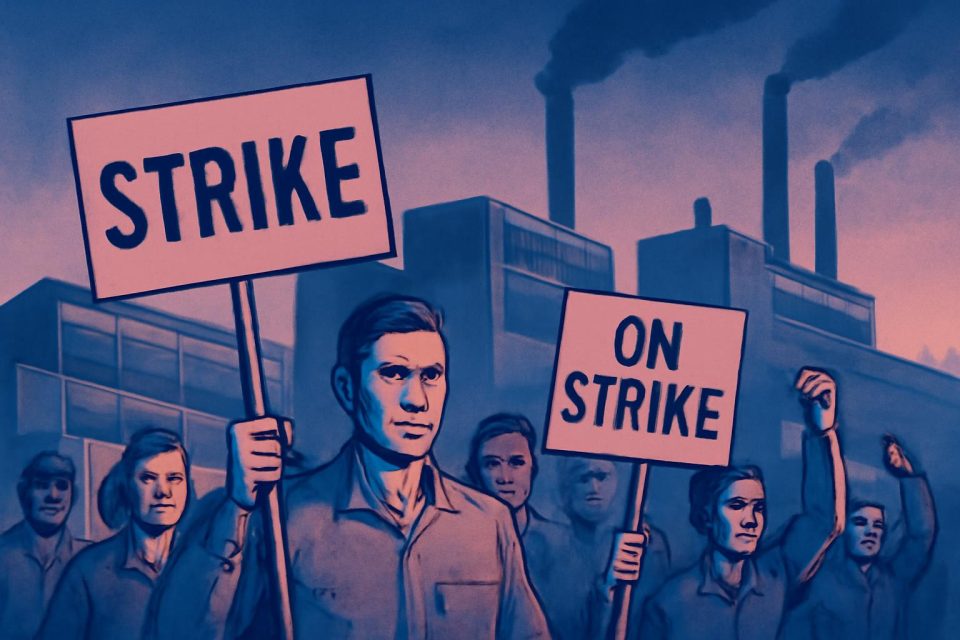
The union on Friday said it was willing to hold new talks after June 7, while maintaining plans for an 18-day strike from May 21 that could disrupt production at the chipmaker.
Analysts attributed the share decline to growing uncertainty over the potential impact of a strike on production and concerns about Samsung's ability to meet its commitments to customers.
"There appears to be rising concerns over delivery reliability if the strike takes place and sentiment that rivals could benefit from the uncertainty," said Ryu Young-ho, a senior analyst at NH Investment & Securities.
The prospect of a strike appeared to be increasing as the company did not seem to be presenting fresh proposals to the union, Ryu said.
In a statement, Samsung Electronics confirmed its offer of unconditional talks, though it did not immediately provide further comment.
Strike cost put at up to $20 billion
South Korea's Labour Commission has also called on the two sides to hold another round of government-mediated talks on Saturday in an effort to avoid a strike.
The union had said it would sit down for talks only if the company presented a detailed proposal addressing the union's demands by 0100 GMT on Friday.
Angry over what it calls a massive gap in bonus pay with rival chipmaker SK Hynix, the union has warned that more than 50,000 workers could walk off the job next week.
South Korean government officials, including the prime minister and finance minister, have voiced concerns that a strike at Samsung should be avoided at all costs, warning it could pose significant risks to economic growth, exports and financial markets.
South Korean Industry Minister Kim Jung-kwan said on Thursday that a strike would cause irreparable damage to the economy and that emergency arbitration could be unavoidable.
Under South Korean law, only the labour minister can invoke emergency arbitration powers. Labour Minister Kim Young-hoon has stressed the need for dialogue between the company and the unions.
In a report, JPMorgan said that the production impact of a strike could be higher than previously anticipated, reflecting the union's expectation of broader worker participation.
JPMorgan estimated the impact on Samsung's operating profit at 21 trillion won to 31 trillion won ($14.08 billion to $20.79 billion), while sales losses could stand at about 4.5 trillion won.
Shares of Samsung Electronics were trading down 5.2% at 0305 GMT, compared with a 3.4% decline in the benchmark KOSPI.