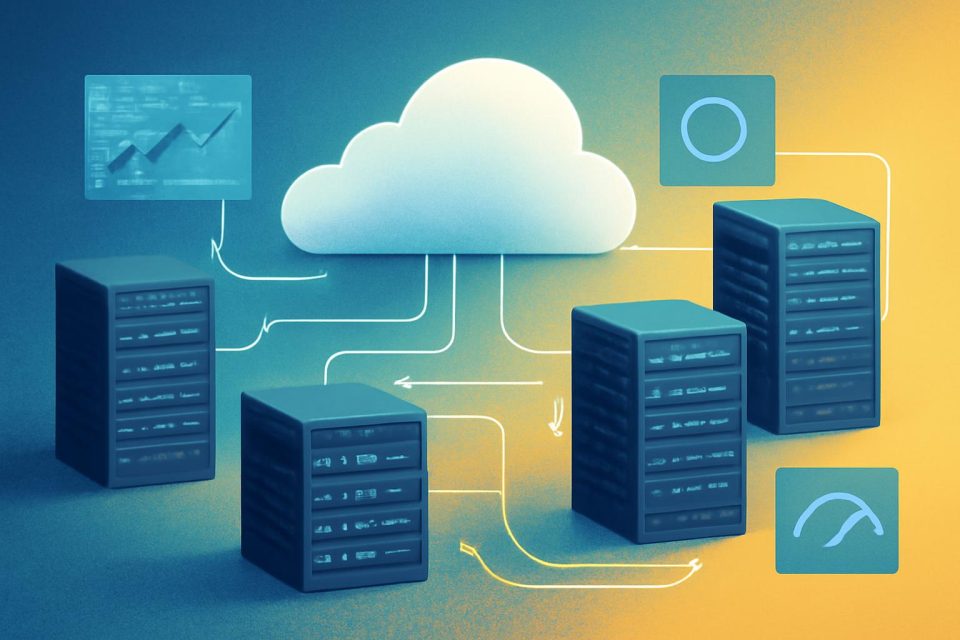
The landscape of enterprise data access is evolving, moving from static reporting to dynamic utilization by autonomous systems. Organizations are now tasked with integrating fragmented data from various sources, including SaaS, IoT, and legacy systems, into secure and scalable endpoints. This transition to AI-driven data exposure necessitates a significant architectural shift to address security, cost management, and semantic accuracy.
Understanding the Shift
This article delves into the technical evolution of data exposure through five distinct architectural patterns, transitioning from manual SQL development to autonomous workflows guided by the Model Context Protocol (MCP). While examples are drawn from BigQuery and simulated CRM data, the principles discussed are applicable to a wide range of enterprise data assets.
Key Factors in Data Evolution
The shift from static reports to agentic insights is influenced by two primary factors: trust and complexity. Trust determines the level of autonomy; low-trust environments require deterministic logic to avoid errors, while high-trust settings allow for probabilistic reasoning. Complexity defines the utility of data access, where simple queries demand quick responses, while intricate, cross-functional problems necessitate an agent to coordinate multiple tools and data sources.
Scenario 1: The Static API Contract
Focus: Stability and deterministic execution.
This traditional model of data exposure involves developers crafting hard-coded SQL queries based on specific business needs. It ensures maximum security and performance by eliminating risks associated with user-generated queries.
Benefits
- Low logic risk: Pre-written SQL minimizes unauthorized data access.
- Secure by design: Parameterized queries protect against SQL injection.
- Reliability: Users receive consistent outputs with predictable performance.
Scenario 2: Custom Agent with SQL Generation
Focus: User flexibility and managed autonomy.
This scenario introduces an LLM agent that dynamically translates natural language into SQL queries, alleviating the development bottleneck of manual SQL writing.
Key Features
- Analyze: The agent interprets user intent.
- Retrieve: It accesses relevant schema metadata.
- Construct: The agent generates valid SQL statements.
Scenario 3: Conversational Analytics
Focus: Managed reasoning and verified logic.
This scenario utilizes a platform-native reasoning engine, allowing for intelligent data agents that adhere to enterprise-specific metadata and verified SQL.
Advantages
- Verified queries: Agents reference a library of vetted SQL to maintain coding standards.
- Managed context: The platform retrieves schema information, reducing errors.
- Aligned outputs: Insights generated are consistent with official reporting metrics.
Scenario 4: Managed MCP Tools
Focus: Standardized connectivity and decoupled architecture.
The Model Context Protocol (MCP) standardizes interactions between AI applications and data tools, allowing for modular systems that separate reasoning from execution.
Benefits of MCP
- High flexibility: Agents can explore any exposed table.
- Medium cost control: Tools are standardized, though agents may still trigger extensive scans.
- Low maintenance: Managed services reduce operational overhead.
Scenario 5: Custom Hosted MCP Servers
Focus: Architectural extensibility and custom tool definition.
This scenario allows organizations to host their own MCP servers, providing full control over tool definitions and integrations.
Key Capabilities
- Deterministic tool tailoring: Developers can define specific data shapes for agents.
- Unified source orchestration: The server can integrate calls across various systems.
- Programmable governance: Enhanced security measures can be implemented directly within the protocol.
Conclusion: Preparing for the Future
The evolution from rigid data silos to autonomous discovery underscores the importance of adopting frameworks like MCP. As organizations embrace these changes, they must also prioritize governance and security to ensure data quality and integrity. The adage "Garbage In, Garbage Out" remains relevant; maintaining high data quality is essential for effective autonomous systems.