Synopsis
The operation was an example of a technology the Metropolitan Police say is transforming policing, helping officers arrest around 2,500 wanted people since the start of 2024, including suspects accused of violent and sexual offences.Listen to this article in summarized format
The operation was an example of a technology the Metropolitan Police say is transforming policing, helping officers arrest around 2,500 wanted people since the start of 2024, including suspects accused of violent and sexual offences.
Critics, however, say live facial recognition undermines the presumption of innocence underpinning British law by treating every passer-by as a potential suspect.
A court challenge brought by civil liberties campaigners and a community worker who had been wrongly identified failed last month, clearing the way for the technology's expanded use.
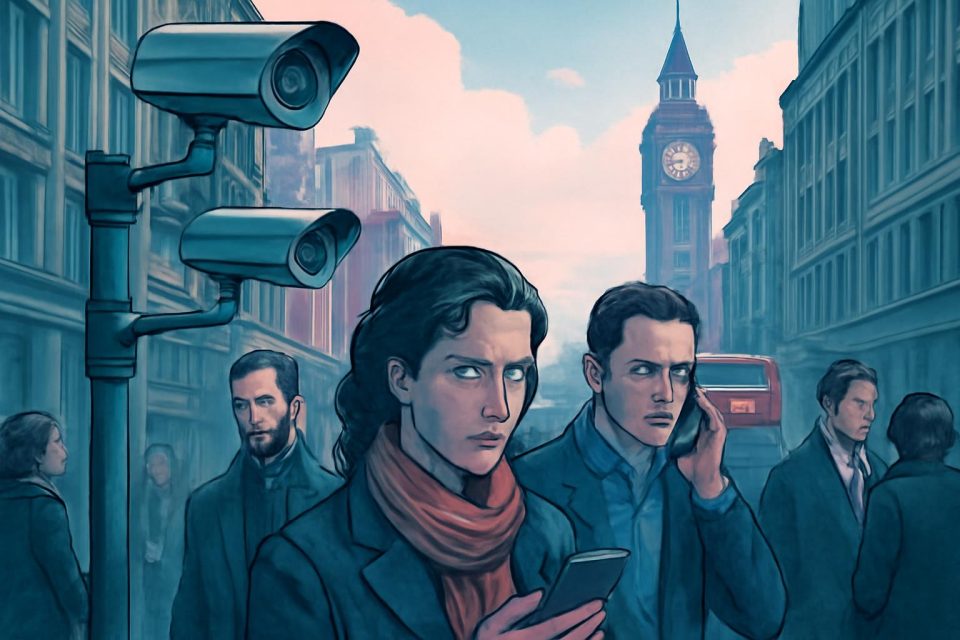
In Victoria, central London, on a recent Monday few people appeared concerned by the temporary cameras, a police van and signs warning that live facial recognition was in operation.
Within an hour, the system alerted an officer in the control van to a possible match. Local officers approached a man and questioned him briefly before letting him go. Police later said the alert related to court-imposed restrictions rather than an arrest warrant.
About 30 minutes later came a second alert. A man in a grey hoodie, black baseball cap and blue trainers looked startled as two officers stopped him on the pavement. He was handcuffed and waited beside the road until a police van arrived to take him into custody.
Police hail 'groundbreaking' technology
Met Police director Lindsey Chiswick, who is the national and Met lead for live facial recognition, said the impact of the technology had been "groundbreaking" for policing in the capital, helping officers identify suspects accused of crimes including robbery, rape and strangulation.
Speaking at the operation in Victoria, she cited a recent case involving a convicted paedophile who was identified as he walked along the street, holding hands with an eight-year-old girl.
"He should never have been out with a young girl like that on his own," she said. "As a consequence of that, he's now back in prison."
The deployment in Victoria, and a simultaneous one in Tottenham, north London, resulted in six arrests for offences including threats to kill, a breach of a court order and a man in possession of a lock knife, the Met said.
Britain has long been one of the world's heaviest users of CCTV cameras in public spaces. Londoners can be caught on film up to several hundred times a day moving around the city.
Now the country is one of Europe's leading adopters of live facial recognition policing, led by the Met.
The technology converts faces into biometric data and compares them against a watchlist of about 17,000 people, mainly compiled from custody images. Images taken from CCTV footage are not accurate enough to use.
"It's a very, very fleeting engagement of two biometric templates, and then it's destroyed, destroyed forever," Chiswick said.
She said that of the more than 3 million faces scanned in the 12 months to last September, the system generated 10 false alerts, all of which officers determined were incorrect.
"There's never been an arrest on the back of a false alert," she said.
'Nation of suspects', say critics
Civil liberties campaigners argue the issue is not only accuracy but principle, saying the technology enables police to screen large numbers of people without any individual suspicion.
Big Brother Watch, which has campaigned against the use of facial recognition, said it risked normalising mass surveillance in public spaces.
LFR was deployed at an anti-immigration march in central London last weekend, the first time it had been used at a protest, prompting criticism from civil liberties groups and protest organisers.
Big Brother Watch said biometric identity checks could not become a prerequisite for free speech.
"The police are already experimenting with embedding live facial recognition into CCTV cameras and have now alarmingly deployed the Orwellian technology for the first time at a protest," said Jasleen Chaggar, Big Brother Watch's senior legal and policy officer.
"We are at risk of becoming a nation of suspects, tracked from the moment we leave our front door, with profound consequences for our rights to privacy, free speech and freedom of association."
The Met said it had received intelligence indicating there could be a threat to public safety from someone attending the protest, adding that LFR had been deployed at approach points to the march but not on the route itself.
Last month, a High Court judge rejected a judicial review challenge brought by Big Brother Watch, ruling the technology's use was lawful. The government is now working on a new legal framework.
Chiswick said the Met had shown it was capable of operating the technology responsibly - and that it had the backing of the public.
"People want crime cleared up on their streets; people want people who've been often wanted and missing for a long time, sometimes operating under false identities, they want these people back in prison where they belong," she said.
"So broadly, 80% of the public in quarterly surveys support our use of this technology in London, which is really high."