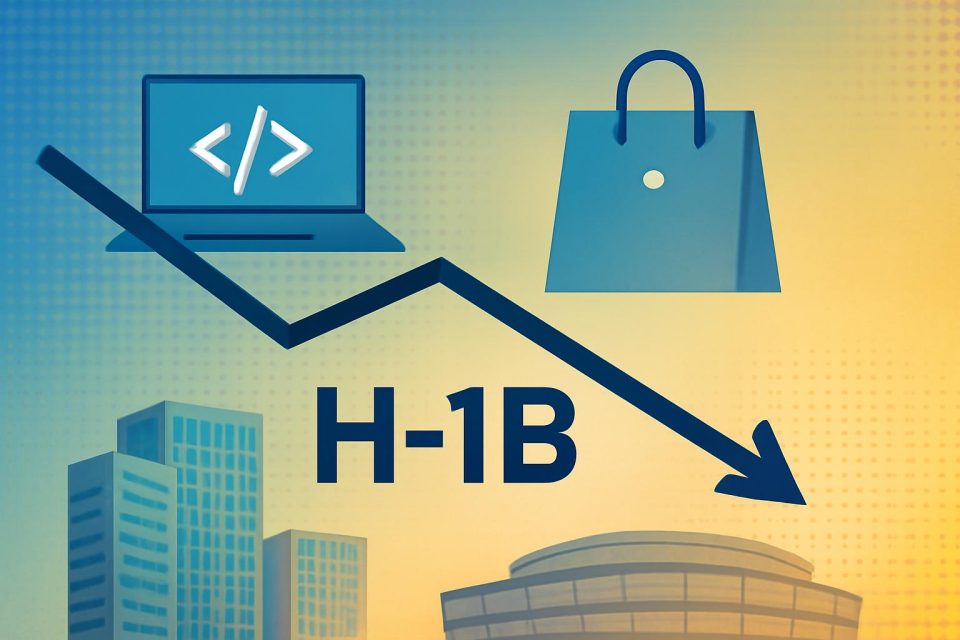
Recent trends indicate a significant decline in the demand for H-1B visas in the United States, marking the lowest levels seen in seven years. This downturn is attributed to rising costs and shifts in policies from the previous administration.
Impact on the Tech Industry
The reduction in H-1B visa applications could have far-reaching implications for the technology sector, which heavily relies on skilled foreign workers. Companies may need to reassess their hiring strategies and consider alternative solutions to fill skill gaps.
Flipkart's Strategic Move
In response to the changing landscape, Flipkart is doubling down on its Shopsy platform, aiming to enhance its offerings and better serve its customer base. This initiative reflects Flipkart's commitment to expanding its e-commerce capabilities.
Key Takeaways
- H-1B visa applications are at a seven-year low.
- Increased costs and policy changes are significant factors in this decline.
- Flipkart is focusing on strengthening its Shopsy platform amidst these challenges.
Why This Matters
The decrease in H-1B visa demand could lead to a tighter labor market for tech companies, potentially stalling innovation and growth. Meanwhile, Flipkart's focus on Shopsy may provide a competitive edge in the e-commerce space.
Next Steps for Companies
Organizations should evaluate their workforce needs and explore diverse talent acquisition strategies. Additionally, keeping an eye on policy changes regarding work visas will be crucial for future planning.


