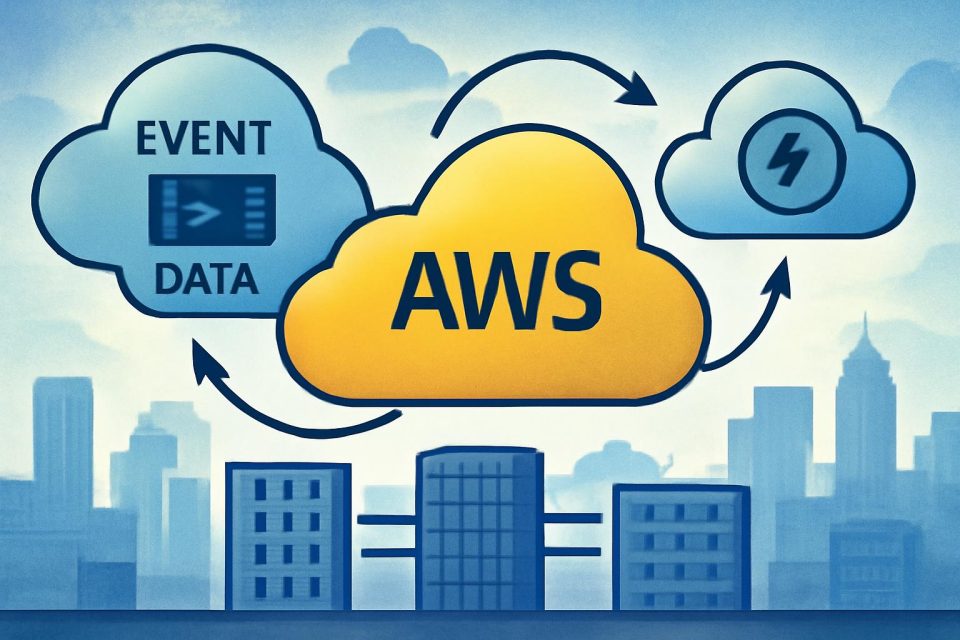
Creating a Multi-Region Event-Driven Architecture
Event-driven architectures empower applications to react to events in real-time, enhancing scalability and ensuring loose coupling among components. To achieve high availability across multiple AWS regions, organizations must design effective failover mechanisms. This article outlines how to establish a robust multi-region architecture utilizing Amazon EventBridge, Amazon API Gateway, and Route 53 for health-based failover.
Architecture Overview
For organizations aiming for high availability and disaster recovery, this architecture facilitates automatic failover between AWS regions while allowing independent event processing. Amazon Route 53 health checks continuously monitor regional API Gateway endpoints, directing traffic to the healthy regions without manual intervention.
Key Benefits
- **Regional Independence**: Reduces latency by processing events in their originating regions.
- **Data Availability**: Amazon DynamoDB global tables ensure automatic data replication across regions.
- **Simplicity**: The architecture maintains robust failover capabilities while remaining straightforward.
Organizations with stringent availability requirements will find this solution particularly beneficial, as it allows for automatic failover based on health check results, accommodating both planned and unplanned outages.
Solution Implementation
This solution employs an active-passive multi-region architecture where events are processed through Amazon API Gateway to regional EventBridge buses. Route 53 health checks monitor the primary region, switching traffic to the secondary region during outages. Each region operates independently, with DynamoDB Global Tables handling data replication.
Deployment Steps
- Deploy the Primary Stack: Set up foundational resources in the primary region, including EventBridge, API Gateway, health checks, Lambda functions, SQS queues, and the DynamoDB Global Table.
- Deploy the Secondary Stack: Create identical resources in the secondary region, linking to the existing Global Table.
- Event Processing Flow: Events are received by API Gateway, routed to EventBridge, and processed by Lambda functions, with results written to the DynamoDB Global Table.
Testing the Architecture
To verify functionality, send an event to the custom domain URL and check the response for the processing region. To test failover, disable the primary API Gateway stage and confirm that event processing occurs in the secondary region.
Cleanup Process
To eliminate the solution and prevent ongoing charges, delete the CloudFormation stacks in the correct order: first the secondary stack, followed by the primary stack. This ensures the safe removal of all resources, including the DynamoDB Global Table.
Conclusion
This guide illustrates the establishment of a resilient multi-region architecture for event-driven applications using AWS services. By leveraging Route 53's health-based failover, this architecture enhances application availability during regional outages while maintaining operational independence.